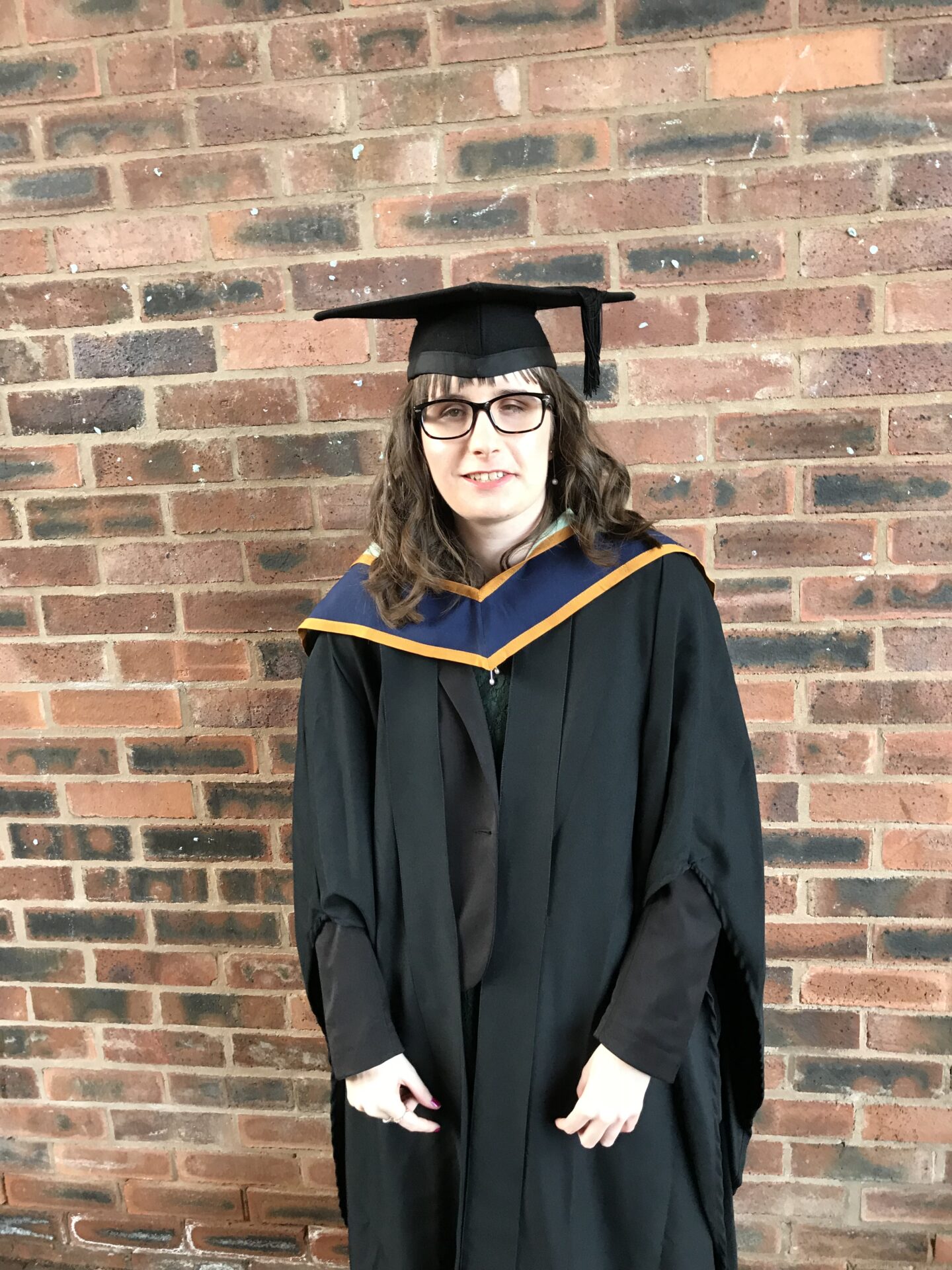
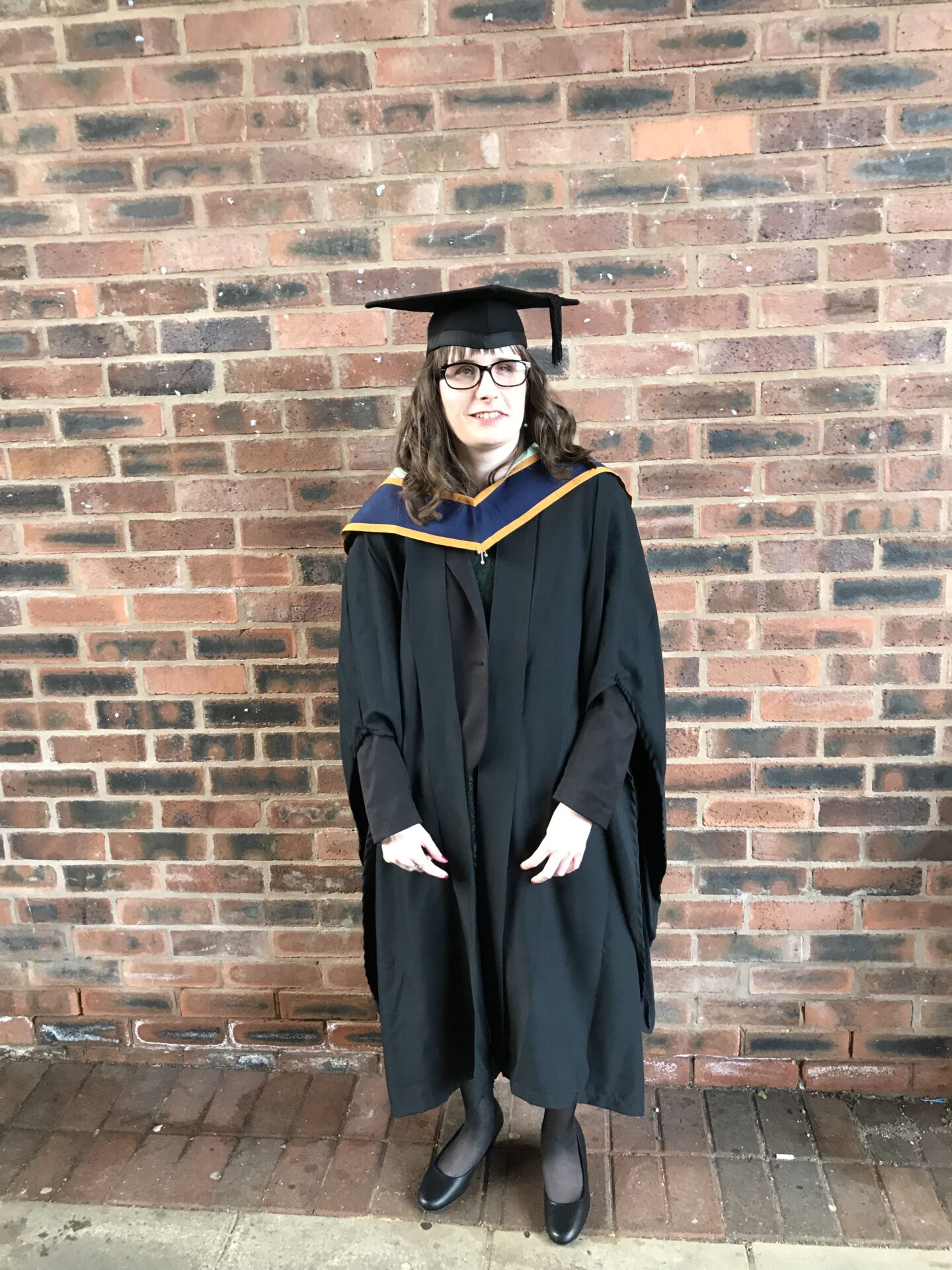
It’s hard to believe that I graduated university three years ago and now work as an Assistive Technology Advisor within higher education. For those of you that don’t know, I studied Children, Young People and Families at York St John University and graduated with a 2:1.
Being a disabled student myself and working within the higher education sector has given me a deeper insight into what it’s really like to be a disabled student.
People often seem shocked when I tell them that I graduated university with a visual impairment, but there is no reason why myself or any other disabled students cannot get their degree!
University can be challenging for everyone, whether you have a disability or not. The endless reading, stress of assignments, the pressure to stick to deadlines and finding the balance of managing work and a social life can take its toll sometimes.
I fully believe that your disability shouldn’t hold you back from achieving. With the right support, adjustments and adaptions, you can get a degree just like everyone else.
There may be times when you feel like you are struggling to find the light, you may have to fight for accessibility, and you may feel like it’s a lot harder. But despite all of that, it is worth it in the end.
There were times when I felt that my vision impairment would stop me from getting my degree, or like my ongoing health problems were getting too much.
My university journey was far from plain sailing, but I got through it, and you know what? I’m proud of myself for overcoming the obstacles, getting through the challenges and coming out stronger on the other side.

I learnt some valuable lessons along the way, so I thought I’d share a few of them with you.
I hope this post helps current or future disabled students in all aspects of university life.
I’m sharing these tips based on my own personal experiences, these are the things that helped me throughout my three years at university.
Contact the Disability service
This is probably the most important piece of advice I can give. The team are there to help you, and they genuinely want to support students.
Speaking to someone about your disability and opening up can be daunting, but I promise you it is worth it.
Don’t leave it until you’re really struggling, speak to them straight away so that they can put any support in place for you.
If you haven’t started University yet, then get in contact with the disability team before you’re due to start, as you can usually arrange a visit to the campus to meet them and discuss things further.
They can also put a plan together for you which includes any reasonable adjustments, accessibility requirements and exam adjustments. This is then passed onto your course tutors.
Having that in place will hopefully make your university journey much easier, as academic staff are aware of your chronic illness or disability, and know how best to support you.
Apply for Disabled Students’ Allowance
Disabled Students’ Allowance (DSA) can cover some of the extra costs you may encounter because of a disability, mental health condition or long-term illness.
If you’re starting University at the start of the next academic year, then it is a good idea to apply for Disabled Students’ Allowance (DSA) before you start. It is even better if you apply within plenty of time before you start University, then you can get everything sorted and things are in place for when you start.
Once you have applied for DSA, you will be asked to attend a needs assessment (which is a lot less scary than it sounds), this is to discuss any support which can be put in place for you.
Some of the things that can be supplied through DSA include non-medical support, specialist equipment, assistive technology software/equipment and any other disability related costs of studying at university.
You may not think that DSA will be useful, but it is worth considering as there’s probably some things that will really help you throughout your university journey.
Please note that DSA is available in the UK, I do not have any knowledge of things in other countries.
Remember that there is support available
Universities offer a range of support. They will have a student services department which provides advice and support to students in all aspects of university life. This department may have another name. The support they offer might include wellbeing support, help with funding and accommodation.
There is often a range of academic support available to all students which is worth checking out.
You can also receive non-medical support through DSA, this may include a mentor or assistive technology training.
Inform others about how they can help you
Throughout my time at University, I was often asked “how can we help you?”
People genuinely wanted to make things as accessible as possible for me, and help in any way they could.
As previously mentioned, the plan system will come in very handy for academic staff as it gives detailed information on your disability, as well as your individual requirements and adjustments.
If you’re talking to someone about how they can help or assist you, tell them exactly what you need. Never feel ashamed or embarrassed to ask for a bit of help.
Asking for help doesn’t take away your independence, it often adds to it!
Similarly, if you don’t need any help then tell them that. Either way, be honest.
Always speak up
If something isn’t going right or not working for you, then it is so important to speak up and make other people aware of the situation.
Talking to a lecturer you trust, someone from the disability service, or asking your friends for advice can help. Never bottle things up or feel bad for advocating for yourself.
If something isn’t working or you’re struggling, then there are people that can help you.
University was where I really found my voice in terms of speaking up and raising awareness of any barriers or issues, I allowed myself to be heard because I knew it was important to do so.
Never feel bad for asking for materials in an accessible format
If you need presentations, documents, books or other materials in accessible formats then that’s okay. Having materials in an accessible format makes a huge difference, so never be afraid to ask for it.
Chances are, you’re not alone in needing something in an accessible format.
Make use of assistive technology
I may be biased here as I love all things assistive tech, but I also know how much of a difference it can make.
I couldn’t have got my degree without the technology I used, it made some of the most difficult tasks a lot easier. As a blind person, technology enables me to do so many things.
Assistive technology can be provided through DSA, and universities sometimes have some pieces of software and equipment available for all students to use, so it is always worth investigating if you think it is something that would help with your studies.
Stay organised
You probably hear this all the time, but organisation really is key.
Staying organised helps you manage your workload, helps you get that ‘work life balance’ and means that you can pace yourself if you need to.
Everyone has their own ways of staying organised, so find a way that works for you and stick to it.
Take the time to really grow as a person
University is often centred around academia, whilst that is a huge part of it and the main thing that gets you that all important degree at the end of it, your time at university is so much more than lectures, seminars and assignments.
As well as learning your course content, you’ll also learn a lot about yourself. You will grow as a person, start figuring out who you are and where you want to be in life .
My three years at university was so much more than gaining a degree, it was the pinnacle moment of my journey of independence, confidence and acceptance. It was a time when I really became comfortable with my disability and loved it in all its glory.
During my time at University I started my blog and got involved in even more opportunities within the disability sector, both at my university and within the wider disability community. Fast-forward a few years, and those opportunities are now a huge part of my life.

Look after yourself
We all feel the pressure and stress at times, and there are moments when it might get too much. If you’re feeling overwhelmed, then take a step back and prioritise yourself. You are the most important thing in all of this.
Remember that point about organisation? If you stay organised and on top of everything, then you can take some time for yourself and maintain that work life balance.
Enjoy yourself!
Most importantly, try to enjoy your time at university. I know that there may be times when you may not enjoy it, and that’s completely natural, but make the most of the good times and cherish those memories.
Get involved with any societies you’re interested in, and try something new if you’d like to. There’s no pressure if you don’t want to though, do whatever you feel comfortable.
University is often a big step in terms of independence, so try new things, learn more about yourself and embrace it all.
Your time at university is like a blank canvas, so paint it your own way.
And remember, never be anyone but yourself!
I hope these tips have been helpful for both current and future disabled students.
All that’s left for me to say now is good luck!
If you found this post helpful, then here are a few other resources that might be useful:
Thomas Pocklington Trust’s Student Support Service
The Student’s Handbook – Look UK
Into HE – Disability Rights UK
Higher Education – British Dyslexia Association
Student Support – National Autistic Society
University and Chronic Illness: A Survival Guide by Pippa Stacey
Why I chose to study with The Open University – Elin Williams
Preparing for university when you have a disability – Chloe Tear
If you have any other tips to share then leave them in the comments!
Holly x

![There’s a phrase we hear far too often: “fully accessible”.
Hotels use it. Venues use it. Website developers use it. Event organisers use it.
On the surface, it sounds brilliant. But there’s no one size fits all approach to accessibility.
Because accessibility isn’t a box you can tick once and forget about. There isn’t a magic point where something becomes accessible to every single disabled person.
Our access needs are different. What works for one person might not work for another.
Rather than asking, “is it accessible?”
Ask: “Accessible for who?”
In my latest blog post, I’m exploring why “fully accessible” is a myth. Head to the link in my bio if you’d like to give it a read.
[Image descriptions:
Image one: Holly stood on a pier, leaning against a railing by a sandy beach with the sea in the background. She wears a black T-shirt, a skirt with a colourful floral pattern, a silver necklace and glasses.
Image two: Holly sat on a low stone wall beside a shallow stream with a path running alongside it. Dense green bushes and trees line the far bank, forming a thick hedge along the water. There is a small bridge and a building in the background. She wears a black T-shirt, a long, multicoloured patterned floral skirt and a silver necklace.]](https://lifeofablindgirl.com/wp-content/plugins/instagram-feed/img/placeholder.png)
hey Holly
though I live in India, I think this post is going to be helpful for me next year, as I’ll be completing my last year of school (grade 12 in India) in 2021 and stepping towards college. it’s too scary yet exciting when I think of it, and I’m sure I’ll be getting back to this post often 🙂
lovely post as always xx
Thank you ☺️ wishing you the best of luck! Xx
thank you so much xxx 🙂
Such great tips which I’m sure will be really helpful to a lot of disabled students. Thank you so much for the mention as well xxx
Great post. When I was in college I got help from the disability support services office. I got large print, notes or note takers, and extra time on tests. We don’t have disability allowance though. We have to go to adult services and get tests to see if we need anything. Then, if we do, it is up to our caseworker to decide if we can get what we need. It all depends on the budget.
Thank you. Sounds like you had some great support. Ahh right, that’s really interesting
This is awesome, thank you Holly. It’s great to hear information and others opinions on how to prepare yourself for the future. I can’t wait for myself to go to college. Also any tips on how to use the oven?
Thank you. Best of luck! I put bumpons on the oven at certain temperatures which I find really helps, and use oven gloves