If you’re a regular reader of my blog, then the title of this post is probably a bit of a surprise to you as I’ve never mentioned ME/CFS before. My ME/CFS diagnosis is very recent, but the symptoms are something that I’ve had for a few years.
So with a recent diagnosis, I thought it was about time I should address it here.
This is a long post, so get comfy!
I originally wasn’t going to talk about my diagnosis on my blog, as everyone’s circumstances are different, but one of the things that helped me with my own diagnosis was reading other people’s blogs and social media posts. It’s also something that I’d like to start talking about on my blog from time to time, so I thought this was a good place to start.
There is a debate surrounding the terminology of the condition, you may hear longer terms such as Myalgic Encephalomyelitis, Chronic Fatigue Syndrome or ME/CFS, but ME/CFS is the one that’s widely used within the community.
Just a quick note – my story does not represent everyone with ME/CFS, it is simply just my own personal experiences. I do hope this post helps others in a similar situation.
Where it all began
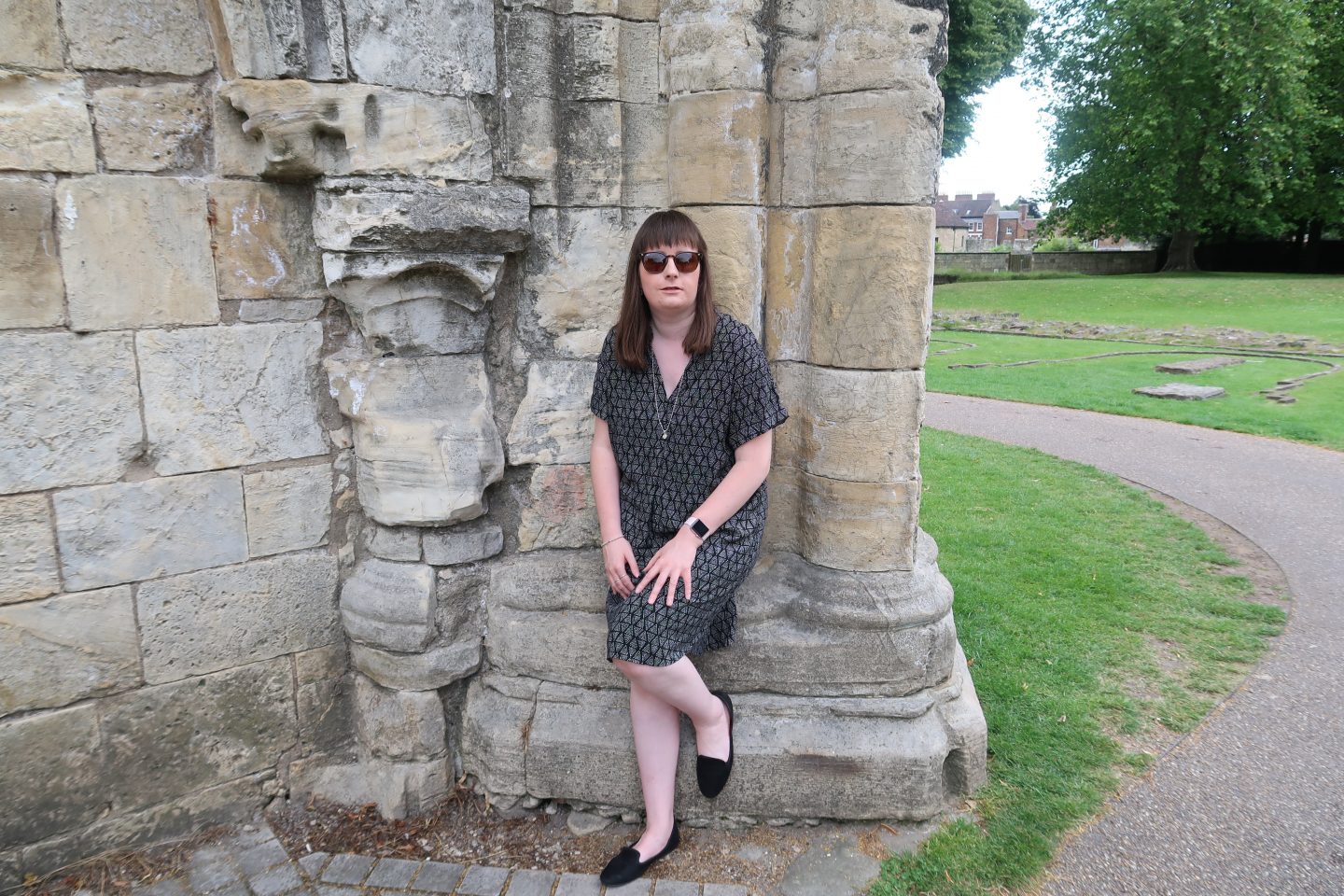
Let’s take things back to the summer of 2014. I had just finished my A-levels, my two years at sixth form weren’t the best for various reasons, but nevertheless, I got the grades I so badly wanted and worked extremely hard for. I was preparing to start University, ensuring that everything was in place for when I started so that I had a smooth transition.
The summer break flew by, and before I knew it, I was embarking on my University journey.
My first year at University got off to a great start – I was really enjoying my course, I had made a good group of friends and was becoming even more confident and independent.
I felt like everything had fit into place, and I felt excited for the future.
Following a virus, I started to notice feelings of extreme tiredness, constant sore throats, I was always feeling cold and my sleep was unrefreshing. Some days, I had to drag myself out of bed, not because I was being a lazy 19 year old, but I just didn’t have the energy.
These symptoms came out of the blue, I had never experienced anything like that before, so I decided to make an appointment to see my GP. I was struggling to concentrate during lectures, and coupled with my other symptoms, I knew that something wasn’t right. Despite all of that, I pushed on, like the determined person I am.
I had a blood test, which indicated that I had an overactive thyroid. I was then referred to a specialist clinic at my local hospital, where I was prescribed some tablets and had regular blood tests to monitor my thyroid levels.
After taking the medication for a while, a routine blood test revealed that I had gone to the other end of the scale – my thyroid was now underactive.
It took a while for it to reach the normal level, but treatment was successful, and I was discharged from the clinic in the summer of 2015.
My symptoms improved, and I felt a bit better.
A few months later, during my second year of University, I noticed that my symptoms were starting to appear again, with constant, overwhelming fatigue being my main symptom. I spoke to the doctor straight away and another blood test was carried out.
This time, it revealed that I was anaemic. I was given some iron tablets and off I went on my way.
I noticed a slight improvement in my symptoms, but it wasn’t long before things spiralled, and my symptoms came creeping back. I knew the feeling of constant fatigue, unrefreshing sleep and difficulty concentrating all too well.
During the summer of 2016, I also developed some eye problems, and this is when the chronic inflammation at the back of my eye decided to rear its ugly head. I tried to push the feeling of constant fatigue to the back of my mind because I had enough going on. It was easier said than done, but I pushed on, trying not to let it create any more problems than I already had.
I had two eye operations in 2017, but I also completed my degree. Looking back, I have no idea how I did it all, I’m putting it down to sheer determination.
Following the two eye operations in January and August of 2017, my eye problems were now a lot more manageable.
This is when I noticed the symptoms of persistent fatigue, constant sore throats, headaches, being sensitive to the cold and difficulty concentrating really spiral. I tried to manage them the best I could, but they were always there. Like usual, I carried on pushing on.
I had conversations with my GP, hoping that they would be able to give me some answers and that we could sort this once and for all. All of my blood tests came back normal, but I often felt dismissed or like there was a lack of understanding.

In November 2017 I started working as an Assistive Technology Advisor at a University, and a few months into the job, things really cranked up a gear.
My symptoms spiralled yet again, but I continued to push on. My GP told me that it was ‘just one of those things’ and that it would sort itself out soon, but the problem was, it never did.
So conversations with my GP and regular blood tests continued throughout 2018, but no concrete answers were given.
I really felt that my symptoms intensified over time, but I kept my head above water, pushing on.
Are you noticing a pattern here?
The summer of 2019 arrived, and yet again, I had a routine blood test. It showed that I had a very slight vitamin D deficiency, but the doctor didn’t think it was the explanation behind my symptoms. Nevertheless, we got it to a normal level, but as expected, my symptoms didn’t improve
As I work at a University, the first semester – September to December, is always the busiest, but it’s when I really noticed the persistent, overwhelming fatigue get out of control, along with my other symptoms. I now know that this is because I pushed myself beyond my limits.
I really felt this during 2019, and very much struggled to keep afloat, but I carried on, bulldozing my way through.
At the start of 2020, I reached the point where I had had enough, I knew the way I was feeling wasn’t normal, and it wasn’t typical of people my age. When reflecting on my teenage years, I had a busy lifestyle, but felt like I couldn’t do those things anymore.
I decided to speak to another GP, and for the first time, I felt like they really understood.
They told me to keep a diary of my symptoms for the next month or so, and we would then review it together and try to notice any possible causes or triggers. For the first time, a doctor listened to everything I had to say without making any assumptions, but most importantly, they recognised that in fact, things were not okay.
I spoke to the same GP in March, and we discussed the diary. They told me to carry on and see how I was feeling. I then spoke to them a few weeks later, and we agreed that my symptoms were very likely to be something like ME/CFS, so I was referred to my local specialist service for the condition. I felt like things were finally moving in the right direction and that I was getting somewhere. If I hadn’t have spoken to that doctor, I fully believe that I’d still be pushing on, searching for answers.
My ME/CFS diagnosis
Following an assessment with an Occupational Therapist at the clinic, I was diagnosed with ME/CFS in May 2020.
The diagnosis felt like a huge weight had been lifted off my shoulders, and things felt so much clearer. For the first time in years, I had answers.
ME/CFS is characterised by extreme fatigue that doesn’t go away with rest. Some of the symptoms include extreme tiredness, sleep problems, sore throats or headaches, problems with temperature control, cognitive disfunction such as ‘brain fog’ or difficulty concentrating, sensitivity to light and sound, and flu-like symptoms, among many others. These symptoms can often fluctuate but are different for everyone with the condition.
There is no cure or treatment for the condition, people have to learn to manage it the best they can.
It all felt rather bittersweet; I got my diagnosis, but what now?
I feel very lucky that I am able to take part in the clinic’s programme in managing the condition as I know that others do not have that option. The programme involves occupational therapy and management techniques.
ME/CFS is very hard to diagnose as there’s no test for the condition, it is a process of elimination and exclusion. in my case, it took several blood tests after my thyroid problems and anaemia were sorted in order to rule out any other conditions, and symptoms had to be documented for at least 4 months before a diagnosis of ME/CFS could be considered.

Overall, it took just under 6 years before I got a diagnosis of Chronic Fatigue Syndrome/Myalgic Encephalomyelitis (ME/CFS). The last 6 years felt a bit like an incomplete jigsaw at times, but I finally feel like the pieces have fit into place.
I’d just like to highlight that I am at the milder end of the spectrum in terms of ME/CFS, I do not have the severe symptoms that some people with the condition experience, and would never claim to do so.
I’m still able to work (with reasonable adjustments in place), carry out usual daily activities, and engage with my campaigning and work within the world of disability. However, I very much have to be mindful of how much I do in order to manage my symptoms, I have to prioritise, pace myself, and know my limits.
These are my own personal experiences, and do not represent the community of people with ME/CFS or other disabilities or chronic illnesses.
I wanted to share my own story in the hope that it may help others, as like I said at the beginning of this post, reading other people’s stories and experiences has helped me with my own diagnosis.
I’m so grateful that I finally have answers, but I know that there are others that are not in that position. If that’s you, please don’t give up, keep fighting and pushing for answers!
I want to use my diagnosis in a positive way, I’m hoping that ME/CFS will be something that I discuss more on my blog from time to time.
If you’ve got this far, then I just want to thank you for reading my ramblings.
I’d love to hear any of your own stories, how long did it take you to get a diagnosis? If you feel comfortable doing so, then leave them in the comments.
Holly x

![There’s a phrase we hear far too often: “fully accessible”.
Hotels use it. Venues use it. Website developers use it. Event organisers use it.
On the surface, it sounds brilliant. But there’s no one size fits all approach to accessibility.
Because accessibility isn’t a box you can tick once and forget about. There isn’t a magic point where something becomes accessible to every single disabled person.
Our access needs are different. What works for one person might not work for another.
Rather than asking, “is it accessible?”
Ask: “Accessible for who?”
In my latest blog post, I’m exploring why “fully accessible” is a myth. Head to the link in my bio if you’d like to give it a read.
[Image descriptions:
Image one: Holly stood on a pier, leaning against a railing by a sandy beach with the sea in the background. She wears a black T-shirt, a skirt with a colourful floral pattern, a silver necklace and glasses.
Image two: Holly sat on a low stone wall beside a shallow stream with a path running alongside it. Dense green bushes and trees line the far bank, forming a thick hedge along the water. There is a small bridge and a building in the background. She wears a black T-shirt, a long, multicoloured patterned floral skirt and a silver necklace.]](https://lifeofablindgirl.com/wp-content/plugins/instagram-feed/img/placeholder.png)
Thank you for sharing your diagnosis and treatment plan. I always appreciate hearing people’s stories. My best friend has severe ME/CFS. I had a similar experience but after autoimmune testing found out that for me, it’s due to autoimmune connective tissue disease. Thankfully after 6 years of trial & error the biologic meds I’m in have improved my daily health. Best to you.
Thank you so much. I’m really glad you eventually got answers as well, but sorry it took so long
dear Holly
your posts are never ramblings, they are so lovely and insightful! I’m glad you got the answers but upset it took about 6 years. I cannot imagine what life looks like when you have constant fatigue and other symptoms on top of it. but I’m aware of the condition as I read a lot of blogs and I know it isn’t something to be taken lightly.
I’m glad I’m able to read and become a part of your journey ahead with ME/CFS.
Khushi x
Thank you so much, Khushi. That means a lot x
dear Holly, your posts are always so informative and interesting read, I can’t stop reading till it has ended! 🙂
I cannot imagine what its like when you experience constant fatigue and other symptoms on top of it. but I agree ME/CFS or any other chronic illness isn’t something to be taken lightly. the least people like myself who do not have any of these conditions can do is make ourselves aware about those and respect and acknowledge them when they come out openly about it.
I had never heard about this and many other conditions till I started reading blogs and it has been so amazing! I now know a lot more than I knew in 2018 and I’m glad I could know more about all this even if it is through reading blogs posts!
Khushi X
Thank you, so glad you always enjoy reading! It has definitely been a journey over the last 6 years. It’s great that you are learning a lot from people’s blogs, they are always really educational. Thank you for your constant support x
So proud of you for sharing this and giving such vivid details of your journey to finally getting a diagnosis. I’m sure this will help a lot of people who find themselves in a similar situation. I can relate a lot to the feeling of that weight being lifted after searching for answers for so long. I know it’s been a difficult journey but you’re doing amazing and I’m glad that you’re getting the support you deserve now xxx
Thank you so much lovely! Forever grateful for your constant support, you’re a true gem xxx
This is a brilliantly informative post about how you found the process of getting your diagnosis. Although I don’t have ME/CSF myself I found it very interesting to get the perspective of someone going through the process of getting a diagnosis and learning to accommodate to this new chapter. I hope your journey to acceptance and managing this condition continues to go from strength to strength.
Thank you so much, that means the world
Hope you feel better soon.
Sorry I’m so slow getting in here to comment, but first I was offline for a bit, and then I’ve been trying to catch up. Anyway, I just wanted to say I’m glad you finally have answers, even if that doesn’t help with improving the situation all that much for you. I hope the condition doesn’t get worse, and the things you learn to do to manage it help at least a bit.
It’s good to have a break from the online world sometimes. Thank you, that means a lot