As a vision impaired person, accessibility is key. I rely on a screen-reader whenever I’m using my phone, iPad or computer. If it wasn’t for assistive technology, then I wouldn’t be able to use such devices.
Like many blind and visually impaired people, my assistive technology is an aspect of my life I couldn’t live without, it gives me independence, as well as the ability to access the online world and important documents just like sighted people. If it wasn’t for assistive technology, I wouldn’t be able to do my job as well as many aspects of life that we often don’t give a second thought. Technology enables me to do so many things that are all at my fingertips.
However, the inaccessibility of websites and documents presents many challenges for blind and visually impaired people, making it harder for us to access the information we need.
When visiting a website for the first time or opening a document I’ve received, I never quite know whether it is going to be accessible or not. If something isn’t accessible, I’m often left feeling frustrated. I have to resort to asking a member of my family for sighted assistance or searching elsewhere for the things I need. I have to ask people for documents in an accessible format and sometimes find myself playing a game of email tennis with messages going back and forth.
Social media is also another area where accessible content is often forgotten, meaning that blind and visually impaired people like myself are excluded from visual content.
I hope one day that accessibility is a priority for everyone, rather than an afterthought.
We shouldn’t be surprised when a document is accessible for screen-reader users, when we can purchase something online without sighted assistance, or when a person has added image descriptions to their social media posts. Accessibility should be the norm.
Accessibility is always extremely important, but even more so right now. Everyone should have access to important information in a format that works for them.
As someone that is really passionate about accessibility and tries to break down barriers in order to strive for change, I thought I’d shed some light on some of the ways you can make both online and offline content accessible for people with a vision impairment.
It would be impossible for me to cover everything in this post, but I’m hoping that it is a good starting point in terms of making content accessible.
Use clear text and have a good colour contrast
Having text in a clear font with a good colour contrast benefits everyone, not just blind and visually impaired people. If text is hard to read, then even sighted people may struggle.
You may think that white text on a yellow background looks good, but it isn’t helpful to anyone.
Use headings
The use of headings makes it easier for screen-reader users to navigate content, especially web pages that have a lot of text or large documents.
Using heading styles also breaks up the content and is great for readability.
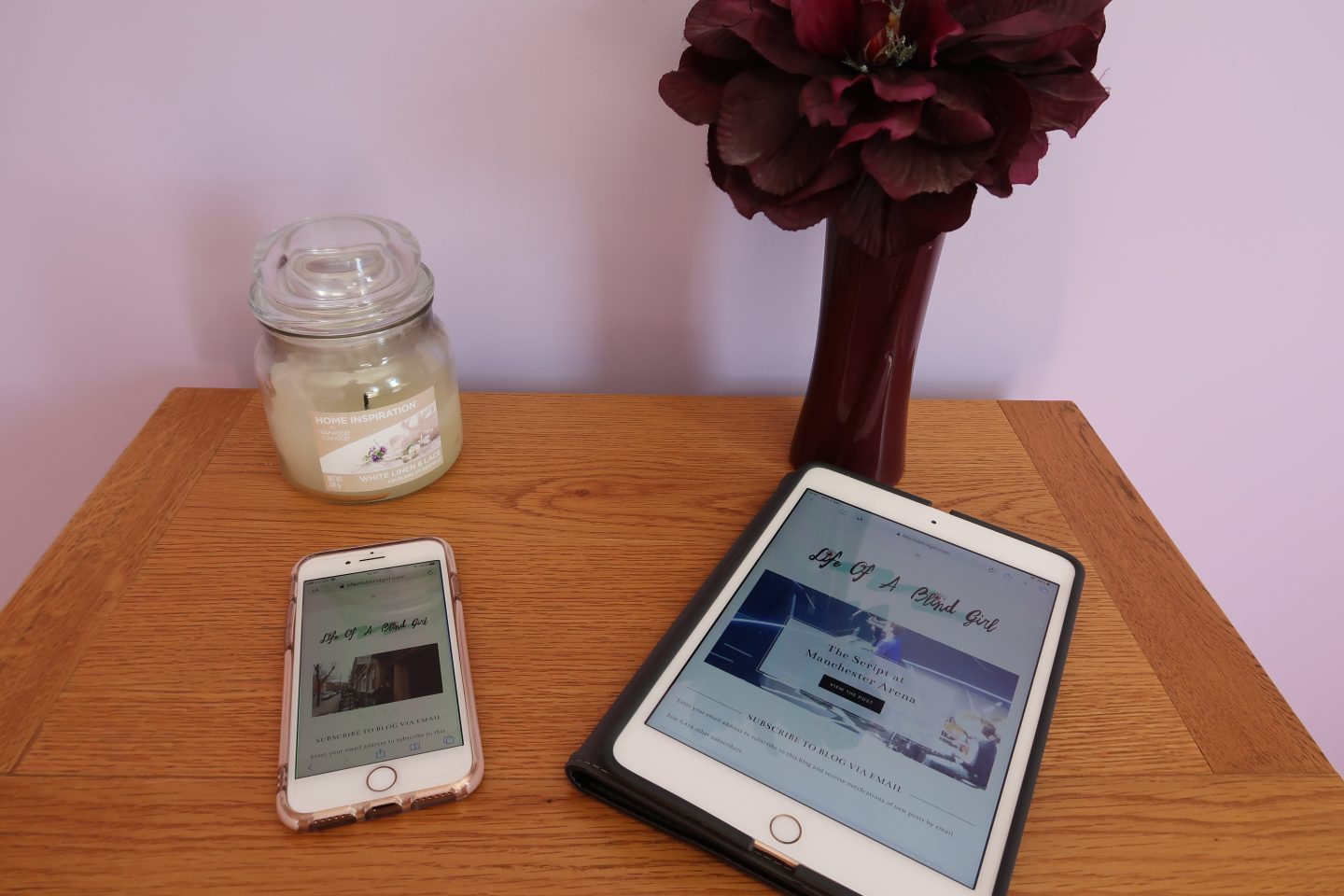
Use alt text
Alt text, also referred to as alternative text, is a written description of an image. It is important to use alt text as the written descriptions are read out by screen-readers.
Alt text can be added in both online and offline content – within documents, on websites and also on social media.
Last year I was interviewed by fellow disability blogger Sarah about using image descriptions and the importance of doing so.
Blind and visually impaired people should be able to access every part of your website, document or social media post, even the visual content.
Label all links and buttons
We never quite know where links or buttons might take us to if it just says ‘click here’ or ‘button’. It is very important that links and buttons are labelled with a clear description of where they lead to.
This also benefits sighted people as well, so it makes your content accessible for everyone.

Capitalise the first letter of each word within a hashtag
Hashtags are widely used on social media. By capitalising the first letter of each word within a hashtag it means that screen-readers will pronounce it correctly, and they are also easier to read visually.
This video is a funny but great example of how capitalising the first letter of each word within a hashtag makes a difference.
Make information available in various formats
Information should be available in various formats in order to make it accessible for everyone. This could be as text on your website or as a downloadable document/PDF. If you are using video content, then you could provide a written transcript of the video.
If you are sharing information on social media, then share the link to the information on your website or put it in the post itself.
Leading on from this, do not solely use images of text to share important information. These images can’t be read out loud by screen-readers and might also be harder for people with some useful vision to read using magnification software.
Accessibility has improved over the years, but we still have a long way to go until all content is accessible.
If you aren’t sure whether something is accessible, then there’s no harm in asking. Engage with blind and visually impaired people about how to make content accessible, and learn from those conversations. You don’t have to know everything, we don’t expect you to, but it is important that you consider accessibility and endeavour to make your content as accessible as possible
There should always be a focus on accessibility because it makes such a huge difference for everyone.
I’m unable to include every single thing that you can do to make your content accessible for blind and visually impaired people as the post would be far too long, but I hope that these have been a good starting point.
Do you have any other tips to add? If so leave them in the comments.
Holly x
![Not only did I attend the 7 goal thriller between @arsenalwfc and @manutdwomen on the final day of the 2024/25 @barclayswsl season over the weekend, I was also provided with the most amazing audio descriptive commentary.
It’s no secret my love of Manchester United. I’m going to make it known now that I have a pretty big soft spot for Arsenal too.
Many of the Arsenal team are some of my favourites. It’s also clear that the club care about accessibility and inclusion for disabled supporters, something that’s extremely important to me.
And their commitment to accessibility was clear from the call I made to book tickets, right through to the match itself.
But the audio descriptive commentary scored an extra goal or two for me. Audio descriptive commentary is a rarity in the women’s game. It’s something I’ve been desperate to experience for the last few years. Now that I’ve had that experience, I can wholeheartedly say that it completely transforms the experience of the match as a blind fan. I don’t have the words to explain the feeling of inclusion it gave me.
I tried to sum it up, documenting my experience of the match over on the blog. If you’d like to give it a read, head over to lifeofablindgirl.com – a link to my blog is also in my bio.
Thanks to an epic game on the pitch and the accessibility off it, the Arsenal versus United match is by far my favourite game I’ve ever attended. I hope to be returning to the Emirates soon!
@arsenal @manchesterunited @alanmarchsport
[Image descriptions:
Image 1: Holly stood in the Emirates Stadium with a view of the pitch behind her. She’s wearing a light blue denim jacket and is smiling at the camera.
Image 2: A Manchester United player running towards the Arsenal goal in the semicircle of the penalty area. Arsenal players can be seen positioned around her.
Image 3: Two Arsenal players hugging each other after celebrating a goal. Other Arsenal players can be seen running towards them to join in the celebrations, whilst Manchester United players are walking away. The Arsenal players are wearing their red home shirts, and the Manchester United players are wearing their blue away shirts.]](https://lifeofablindgirl.com/wp-content/plugins/instagram-feed/img/placeholder.png)
hi
another lovely and useful post as always. keep well, stay safe xx.
Thank you 🙂 xx
Great tips.
Thank you
Another really helpful post hun with lots of great tips that I’m sure will help a lot of people to gain a better understanding of how to make content accessible. I completely agree that accessibility is key, we deserve to have the same access to content like everyone else xxx
Thank you hun. Yes 100%! Xxx
Clear and useful guide to accessibility. Could it be in a slightly larger and sans serif font, please.
Thank you. Apologies, I will look into that