There’s no doubt about it, disabled people are used to having to prove others wrong.
Something I’ve said time and time again on here is that society often assumes that we can’t do something because we’re disabled. Those assumptions become barriers, and we spend so much of our lives pushing back against them, proving ourselves, and showing that disability doesn’t limit our potential.
It’s pretty exhausting.
Lately though, I’ve found myself caught in a never-ending cycle of having to focus on what I can’t do as a disabled person, simply to get the support I need. It’s taken a toll on me mentally, and at times, I’ve been a shell of myself. The person I’ve worked so hard to become has felt like she’s slowly been unravelled one thread at a time.
When you’re applying for support that you know full well you’re entitled to, asking for adjustments, or explaining why you need help, the conversation often centres around the negatives. What can’t you do? What barriers do you face? How and why are you struggling? How does your disability impact you?
I’m not dismissing those questions. I know they’re important. But after answering them countless times, your focus naturally shifts from ‘I can’ to ‘I can’t’. You start to believe the ‘I can’t’, rather than the ‘I can’.
Those thoughts have felt a lot louder as of late. Being real and open as I always am on here, I lost myself in the process.
So that’s why I’m writing this letter. I want to shift the focus for all the other disabled people who find themselves in that endless loop. I’m also either selfishly or unselfishly writing it as a way of taking control again. Because needing support and also being capable aren’t opposites.
Dear society,
We need to talk.
Your regular assumption is to focus on what a disabled person can’t do, rather than what we can. And I’m tired.
Tired of you not removing the barriers.
Tired of you focusing on what we can’t do.
Tired of you not seeing the person as a whole.
That’s become apparent to me recently, as I’ve spent so much time justifying my needs, explaining the challenges, and focusing on what I can’t do. The systems have demanded evidence, and questioned my capabilities. That in my head, appeared as limitations.
I’ve had to overexplain myself, so for my support requests not to be misinterpreted.
Somewhere between the explaining, the forms, and the justification, I started to measure myself on all of those things. Everything else became a blur.
This letter is for you, just as much as it is for me.
I can advocate for myself and others.
Not because I enjoy having to fight for things, but because I’m all too familiar with knowing how you often need someone to speak up. Whether that’s you, or someone else. I’m also far too familiar with the times when you just don’t have the energy to do so.
What I’d wish society would understand is how much energy advocacy takes. Whilst a lot of it is a choice, there’s equally as many times we’re thrown into advocacy mode because we have to be. That energy all adds up.
I can speak up for myself.
Perhaps most importantly, I have learned that I’m allowed to. That might seem simple, yet it isn’t. Not when society wants you to take the easy option of staying quiet.
Speaking up means unlearning a lot of internalised ableism, much of which I’m still learning.
I can recognise that my needs matter.
I will stand firm in saying that access isn’t a luxury. When I request for something to be made accessible, I’m not asking for someone to do me a favour. It should have been there from the beginning.
I can embrace the skills I once wanted to hide.
Take being able to read and write braille. Although society treats braille as something outdated, it gives me literacy, freedom and choice.
I now feel confident when using my long cane, something I never thought possible.
I enjoy using assistive technology, and know the value of it.
These things provide me with independence and allow me to participate in a world that doesn’t always have people like me in mind.
I can use my lived experience to help others.
Whether that’s as part of my work as a Social Media Manager, or through my writing, I’m incredibly passionate about the work I do.
I thrive on using my own experiences to support others and play any part I can in creating change.
I’ve come to realise how special that is.
I can be a Social Media Manager.
Taking the next step in my career is one of my proudest achievements. It’s come with a lot of learnings and realisations.
I can now do things I never thought I could do, like overseeing projects, leading on crucial elements of working in social media, managing stakeholders, and contribute to a team. Society told me I couldn’t do those things. Here I am, proving them wrong, and proving to myself that I can do it.
I can be creative.
On the surface, creativity is seen as visuals like funky videos or eye catching graphics, and I’ve got caught up on that too. Creativity though, is about so much more than what you can see.
For me, creativity is about the content I create as part of my job, on my own channels, through my writing, and advocacy I pursue. Every form of creativity has an impact. Although mine might be different to the next person’s, it still matters.
I can be a leader.
If you’d have told younger Holly this, she’d never have believed you.
I’m not talking about being in a leadership position, at least not yet anyway. Rather, in the practical sense. I can lead on projects and meetings, steer the discussion, and make impactful decisions.
I can use my voice. Leading doesn’t always mean being the loudest voice in the room.
I can surprise myself of my capabilities.
When I look back at earlier versions of myself, she’d be amazed at where I am now. I hadn’t realised what I was capable of back then.
Now, I’m a manager, versed in the world of disability advocacy, regularly do public speaking and other related opportunities. I travel up and down the country, have jetted abroad, and live the life I want.
For a quiet girl who had very little confidence, that’s not too shabby.
I can contribute.
I might not always have the most coherent thoughts thanks to brain fog. What I can do, is contribute to my workplace, to my community which I adore, to conversations that matter, and making the world a little more accessible one push at a time.
I can take up space.
I’ve worried that I’m an inconvenience, that I’m causing too many problems or being a burden. I’m unlearning that.
The matter of fact is that I deserve to take up space just as much as anyone else.
I can solve problems in ways I never expected.
Something I say over and over again is that disabled people are natural problem solvers. We solve problems, even before breakfast.
Think of the adaptions, the finding of alternatives on the spot, and the constant assessing of access.
Mine, and every single disabled person’s problem solving aren’t just because we’re disabled. It’s been shaped by it.
I can recognise disabled burnout.
Perhaps most importantly, I can now admit when it hits. I’ve learned that acknowledging that mental, physical and emotional exhaustion doesn’t mean that I’m a failure, it means that I’m being honest with myself.
I can be vulnerable.
Society conditioned me to think that I had to carry everything on my shoulders. I thought admitting I was struggling cancelled out the progress I’d made.
If I let people see the difficult days, that’s all they’d see.
Vulnerability isn’t a weakness. I’ll admit when things are hard. I’ll let people in.
Pretending I’m okay isn’t benefitting anyone, especially not me.
I can keep going.
There have been days where I’ve felt like the world is against me. There’s been moments when it’s felt like there’s no way round the obstacles. Yet I’m still here.
Still trying, and still showing up. No matter how hard it gets, I know I have more to give.
I can get to a place of acceptance.
Considering how long it took me, I’m filled with pride when I say that.
I’ve reached a point where I don’t want to be fixed. I don’t long for a cure for my blindness.
Hand on heart, I wouldn’t change anything. I couldn’t imagine my life if I wasn’t disabled.
I’m comfortable within my own skin. That in itself, is a pretty big milestone that should be celebrated.
I can recognise how far I’ve come.
Okay, okay, so I don’t do this as much as I should. When I stop and look back, I can see the growth. I’m taking a moment now to shout about that.
I can trust myself.
Society has questioned my needs enough that I’ve questioned them too. With that said, I still do. This one is still a work in progress.
I’m learning to trust myself and not get those permission slips from others.
I’ve repeatedly proved that I can do it, even when the voice in my head is shouting the opposite.
I can find joy in my disabled identity.
I used to think that acceptance meant tolerating my disability. It was a case of survival, not thriving.
Now I know it’s more than that. It’s about pride, community, and recognising the value in how my experiences have shaped who I am.
I can be more than my disability.
My disability shapes my life, how I move through the world, and my every day. But it isn’t the only thing about me.
It never has, and it never will be.
I can exist in this world without having to prove myself.
Oh this is a tough one. But it feels good to write those words.
I still find myself slipping into those habits sometimes.
What I’m learning is that I don’t need to justify every adjustment or support request. I don’t need to show that I’m capable, because I’m surrounded by people who know I am. All they want is for me to also believe it.
I can let go of who I thought I had to be, and embrace who I want to be.
I thought I had to be the perfect disabled person. Now I know that I don’t need to be anyone but myself.
I can do it, even when the world tells me I can’t.
I don’t have to constantly prove what I can do. I don’t have to justify my existence or earn my place.
There’s two words that I keep coming back to: I belong.
And that feels like a full circle moment.
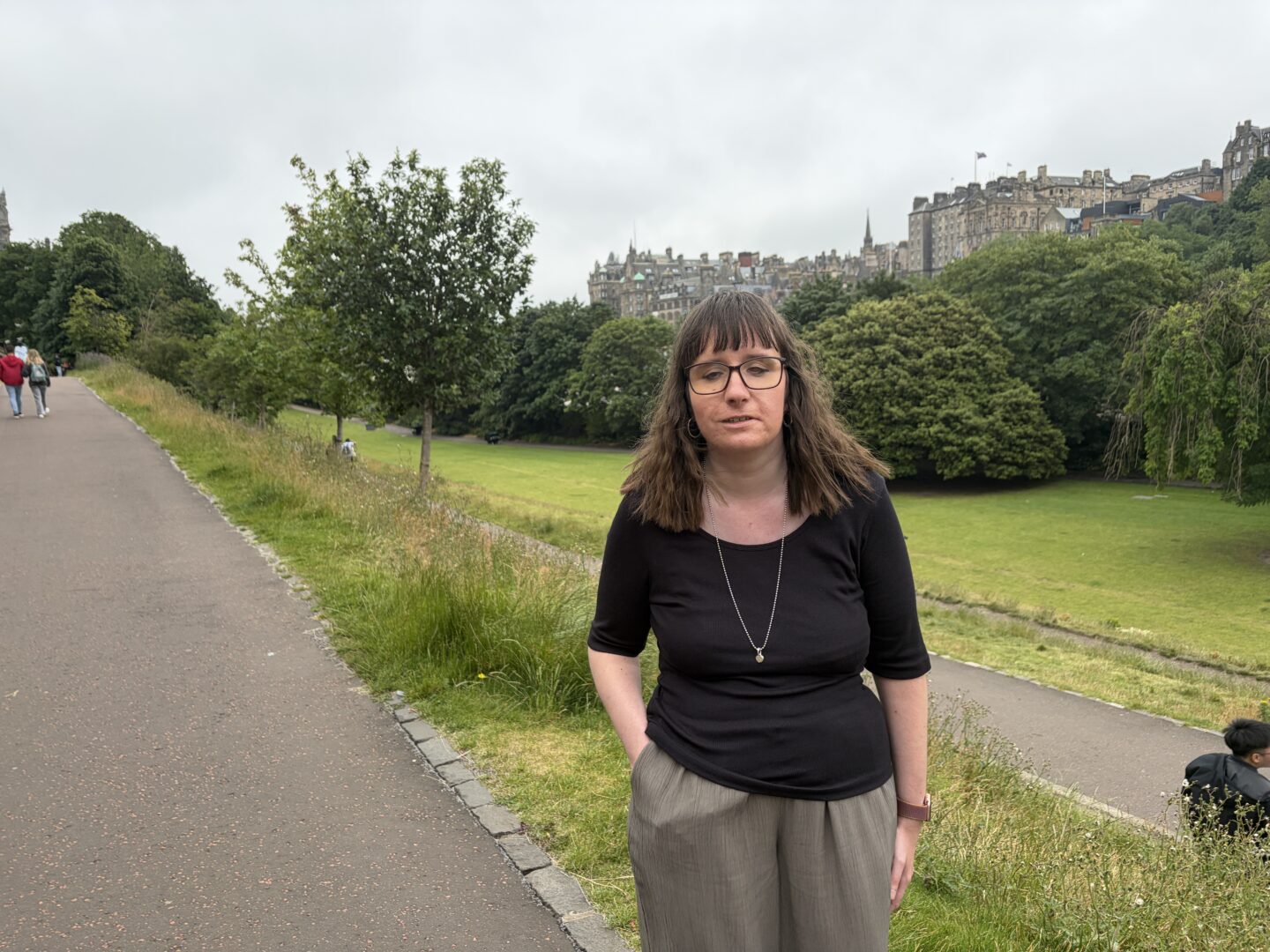
I’m quite modest. I’m therefore not the best at admitting what I can do, or what I’m good at.
I also let the ‘I can’t’ take over in my head.
Under that modesty is a sense of pride. I’m reclaiming my identity.
Now this post is out there, I’ll be shutting the laptop lid.
As well as being a reminder to me, I hope this letter shows that disabled people are capable human beings.
We have tons to offer, and so much potential. We just need the chance to show the world what we *can* do.
Holly x

![There’s a phrase we hear far too often: “fully accessible”.
Hotels use it. Venues use it. Website developers use it. Event organisers use it.
On the surface, it sounds brilliant. But there’s no one size fits all approach to accessibility.
Because accessibility isn’t a box you can tick once and forget about. There isn’t a magic point where something becomes accessible to every single disabled person.
Our access needs are different. What works for one person might not work for another.
Rather than asking, “is it accessible?”
Ask: “Accessible for who?”
In my latest blog post, I’m exploring why “fully accessible” is a myth. Head to the link in my bio if you’d like to give it a read.
[Image descriptions:
Image one: Holly stood on a pier, leaning against a railing by a sandy beach with the sea in the background. She wears a black T-shirt, a skirt with a colourful floral pattern, a silver necklace and glasses.
Image two: Holly sat on a low stone wall beside a shallow stream with a path running alongside it. Dense green bushes and trees line the far bank, forming a thick hedge along the water. There is a small bridge and a building in the background. She wears a black T-shirt, a long, multicoloured patterned floral skirt and a silver necklace.]](https://lifeofablindgirl.com/wp-content/plugins/instagram-feed/img/placeholder.png)
Leave a Reply