This post is a combination of a life update from me, and sharing an experience that I hope might bring comfort to a fellow perspective future guide dog handler.
As you can gather from the title, withdrawing from training isn’t how I, or anyone wants to imagine their guide dog training taking shape.
I guess it’s best to start with giving some context. During the process of applying for a guide dog, I spoke at length with everyone along the way about how I needed a guide dog that is hypoallergenic due to having an allergy to pet hair. Ironically, it’s something that impacts my eyes the most due to inflammation in my left eye.
I’ve tried every eye drop and antihistamine, with little relief.
I knew that getting a hypoallergenic dog wasn’t going to be easy – they’re not bred very often, and there’s so many factors when matching dogs to blind and vision impaired people.
That’s why I’ve been waiting almost three years for my match. It’s also why earlier this year, I was asked whether I’d be open to exploring alternative dog breeds.
One Monday afternoon in September, I received a call from a member of staff at Guide Dogs who was letting me know that they’d found a potential match for me.
It’s the call every person on the waiting list hopes for.
With mine, the allergies were an extra factor that could rewrite the experience.
The Guide Dogs Mobility Specialist (GDMS) took a lot of time to chat everything through with me, listen to my concerns, and answer any questions I had.
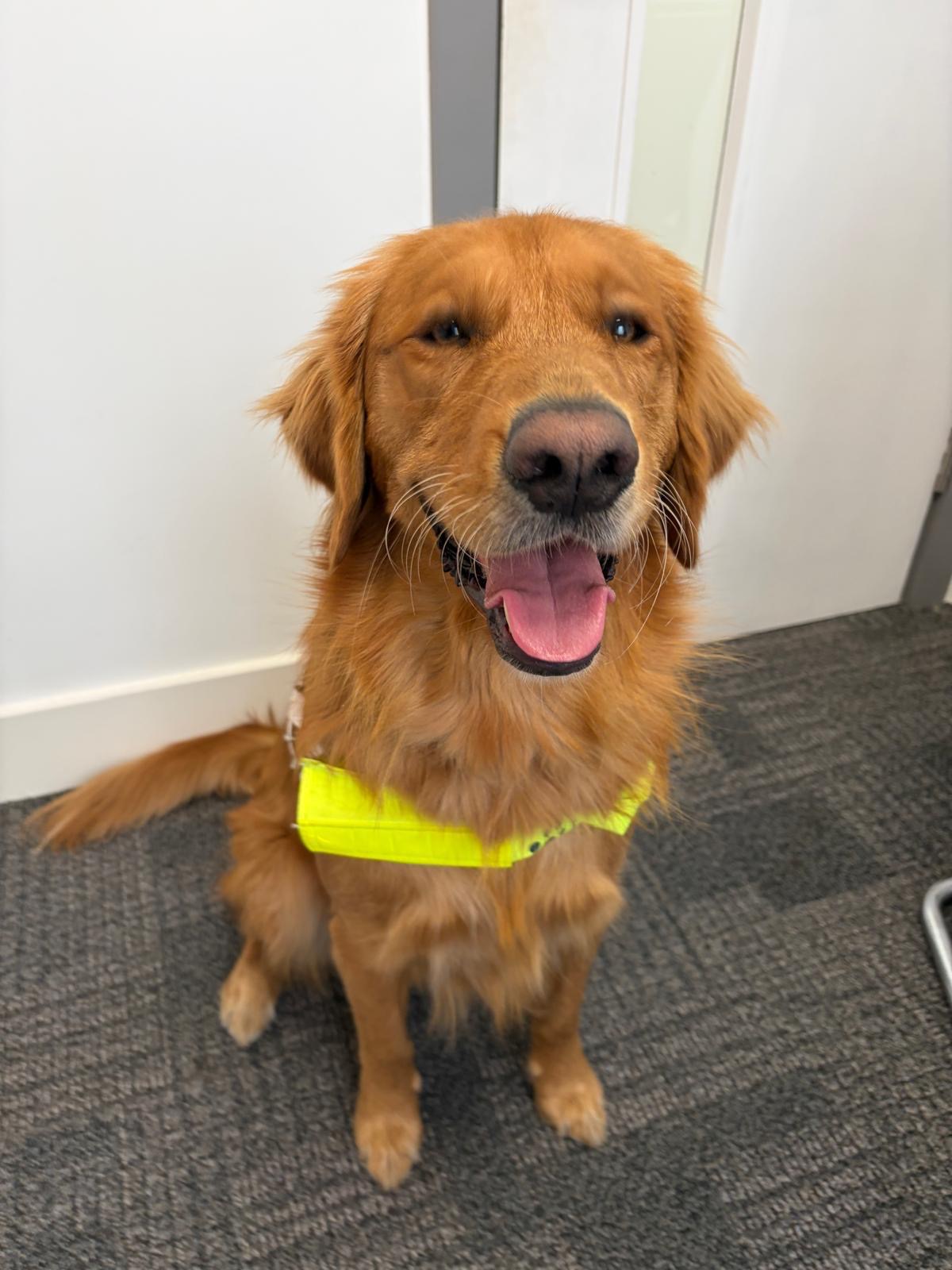
The dog I’d been matched with was a golden retriever called Jukey, and his temperament sounded perfect for everything I was looking for in a match. The GDMS explained the reasons behind the match, including the considerations around his coat and my allergies. It was a trial though, and that’s all we could do.
I was told to have a think, speak to my family and let her know whether I’d like to proceed.
After some thinking time to weigh up my options, I decided I wanted to proceed with the matching visit to meet Jukey. Not only was it a matching visit for our suitability to be assessed, it was also assessing my allergies.
After so long waiting for the right match, I knew I had to be realistic about the challenges my allergies could bring. I also knew that I wanted to take the opportunity. I didn’t want to rule it out without exploring it first.
Although I didn’t want to get my hopes up, it was hard not to. There was a lot riding on this matching visit.
A few days later, I headed down to London to meet Jukey. I instantly fell in love with the gorgeous boy.
We had some bonding time together, before we went on a harness walk, navigating the streets of London. What an amazing feeling that was. He navigated around obstacles that I didn’t even know were in our path, waited patiently at roads, and made navigating around the big smoke feel like an entirely new world of possibilities.
The GDMS decided that we were a match. I felt like we were too.
The next steps were for me to then go home and assess my allergies. We’d then decide whether I wanted to proceed with training in the coming weeks.
Unfortunately, that evening and the following day I reacted really badly. It took me a couple of days to recover.
I spoke with my family and the GDMS, and I made the decision that I wanted to try the training. My feeling was that I had nothing to lose.
If it worked out, that’d be amazing. If it didn’t, I can say that I’d tried. Either way, I’d still have that experience and make those memories with Jukey. That’s something I’ll always remember to be a crucial part of my guide dog journey.
I knew there was a risk that we might not be able to move forward, but I also knew that I’d always wonder what might have been if I hadn’t tried. I wanted to give it a chance, whilst knowing that I’d have to listen to my body and be honest about whether it was going to work or not.
10 days later, I was on my way to London again, about to embark on my guide dog training.
I’m not going to go into too much detail about the training in this post, because fingers crossed one day I’ll be able to dedicate an entire blog post to that.
The next 4 days consisted of a lot of bonding with Jukey, some incredible harness walks together, learning about the feeding regime, grooming, and being taught the important commands. It was also about building up a partnership with each other.
I went into the training with an open mind, but I knew my allergy symptoms could decide the next steps in our partnership.
As the week progressed, my symptoms got worse. What started as being manageable left me with increasing eye pain, and other symptoms gradually increasing.
I made the decision to withdraw from the training for that reason. It was one of the hardest decisions I’ve had to make in regard to my disability.
I toyed with every possibility; did I carry on and hope for the best, did I give it some more time and start the training at home, or did I say that I’d tried it and it wasn’t meant to be this time.
Although I knew that making that decision was almost inevitable, it didn’t make it any easier. I felt crushed.
I had the most gorgeous dog by my side, a harness in my hand, navigating the streets of London like a breeze.
That’s why walking away was so difficult. To step away from that freedom and that liberation was something I never imagined I’d find so hard until I was faced with it.
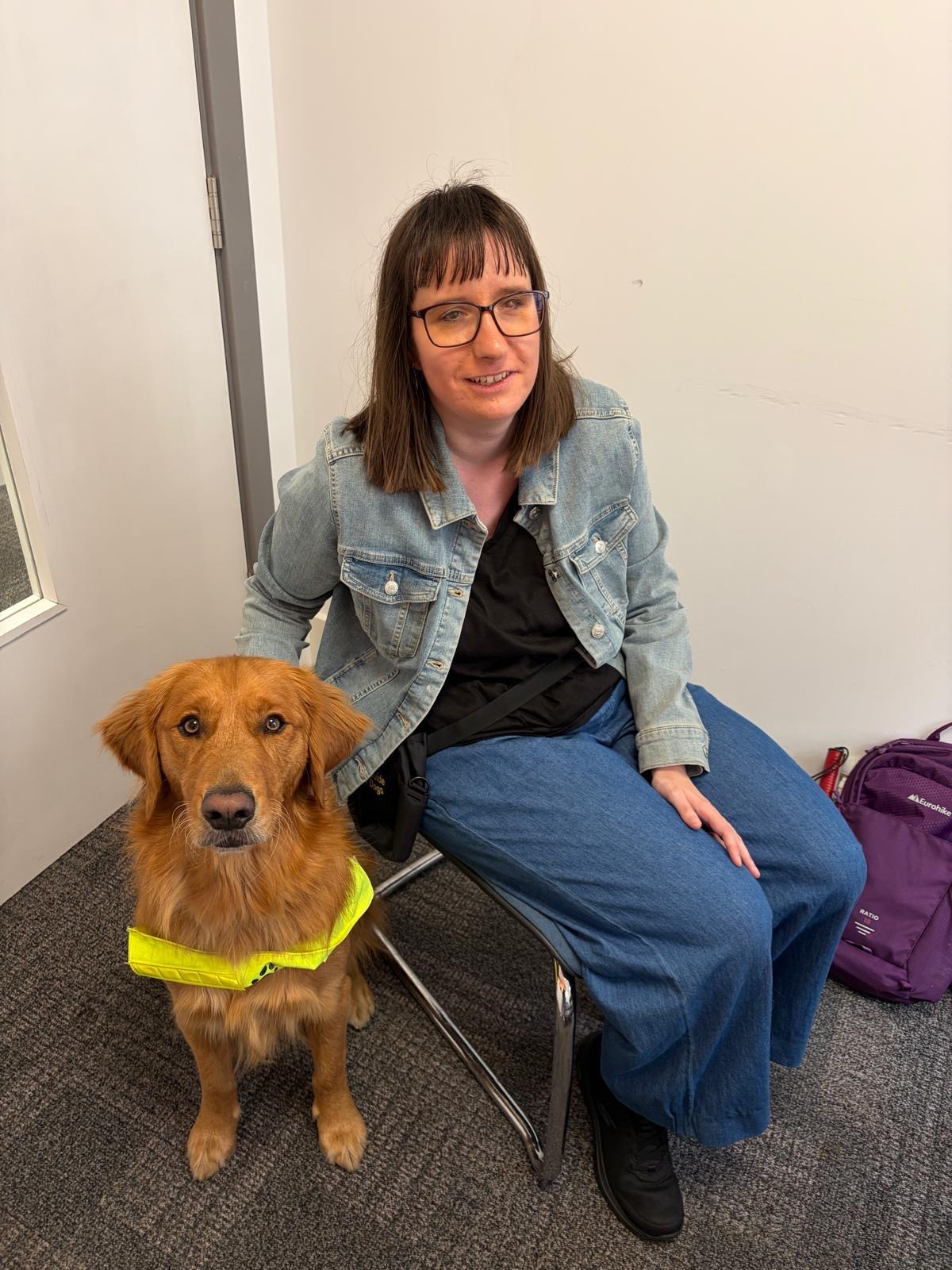
I’d spent so much time, energy and hope into getting there. I asked myself whether I should push through, trying to convince myself that it might get easier if I persevered.
I’d tried, and that’s all I could do.
Sometimes making the right decision doesn’t feel like a victory. It feels like heartbreak.
It wasn’t a decision I made because I’d changed my mind, or because the training wasn’t what I’d hoped for. It was the opposite.
Hoping for something and being able to make it work aren’t mutually exclusive. I had to acknowledge that and make those difficult decisions.
Guide dog training is tough, mentally and physically. You’re learning new skills and taking on a completely new way of life.
Stepping away from the training was even harder than I ever imagined. After I’d made that decision, someone told me that it’d take a bigger toll than the training itself, and they’re right.
Walking away was extremely hard. It’s taken me a few weeks to process it, and in some ways, I’m still processing it.
Even though we were nowhere close to qualifying, I felt like I was grieving something that was in touching distance.
One of the hardest parts of withdrawing was coming to terms with the fact that something I’d spent almost three years waiting for wasn’t going to work out in the way I’d imagined.
It’s natural to imagine the independence, the freedom, the confidence, and all the little things you see others talk about. There’s an excitement when you think about the walks you’ll go on together, the places you’ll visit, and the partnership you’ll build with a dog that’ll become such an important part of your life.
You don’t really spend time thinking about it not working out.
We talk about the excitement of being matched, the hard work that goes into training, and the incredible partnerships that form between guide dogs and their handlers. We celebrate the milestones, and the moments when everything falls into place.
There are times though, when it doesn’t work out that way. People withdraw from training for all sorts of reasons, yet those experiences aren’t something we hear about.
We need to make more room for those stories, because they’re just as important. That’s a big part of why I wanted to share mine.
Doing the training with Jukey confirmed to me how much a guide dog could change my life, and I wanted that future so badly. I could feel our partnership building day by day, walk by walk.
As much as I hoped for that, I also had to recognise that my body was telling me something. I couldn’t put myself or Jukey through that throughout our 8-10 year partnership.
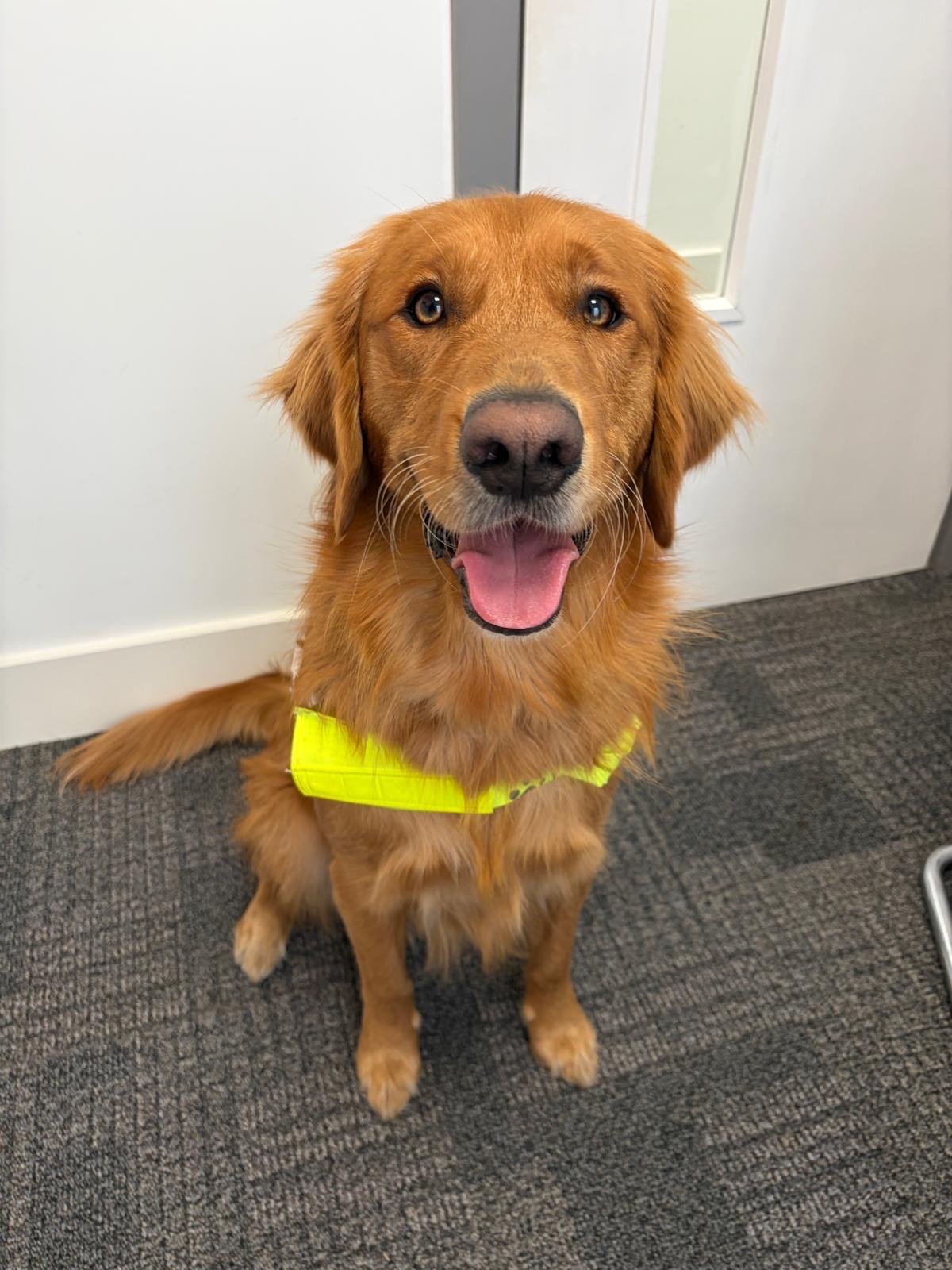
It’s not the end of my guide dog journey, far from it. We’re exploring what the next steps might look like.
For now, I’m trying to see this as a bump in the road. Whatever the future might look like, I’ll hold on to this experience.
Even though it was hard, I now know that I had to go through that experience to look towards the future.
I took a heck of a lot away from the experience, and that’s something that can’t be taken from me. I’m proud of myself for making a decision that wasn’t easy.
If you’re on the waiting list for a guide dog or a prospective guide dog handler facing a similar decision, I hope you know that whatever decision you make, it will be the right one for you.
You’re allowed to feel disappointed. You’re allowed to grieve the future you hoped for.
I hope that by sharing my experience, someone, somewhere, might find a little comfort in knowing they’re not the only one navigating these decisions, or these feelings.
As for me, I’m still holding out hope. This isn’t where I thought my guide dog journey would take me, but it’s not the end of the story.
Holly x

![There’s a phrase we hear far too often: “fully accessible”.
Hotels use it. Venues use it. Website developers use it. Event organisers use it.
On the surface, it sounds brilliant. But there’s no one size fits all approach to accessibility.
Because accessibility isn’t a box you can tick once and forget about. There isn’t a magic point where something becomes accessible to every single disabled person.
Our access needs are different. What works for one person might not work for another.
Rather than asking, “is it accessible?”
Ask: “Accessible for who?”
In my latest blog post, I’m exploring why “fully accessible” is a myth. Head to the link in my bio if you’d like to give it a read.
[Image descriptions:
Image one: Holly stood on a pier, leaning against a railing by a sandy beach with the sea in the background. She wears a black T-shirt, a skirt with a colourful floral pattern, a silver necklace and glasses.
Image two: Holly sat on a low stone wall beside a shallow stream with a path running alongside it. Dense green bushes and trees line the far bank, forming a thick hedge along the water. There is a small bridge and a building in the background. She wears a black T-shirt, a long, multicoloured patterned floral skirt and a silver necklace.]](https://lifeofablindgirl.com/wp-content/plugins/instagram-feed/img/placeholder.png)
Leave a Reply