Whether you’re disabled or not, you’ve probably seen the following before.
A hotel describes itself as fully accessible. A venue says it’s fully accessible. A website proudly announces in its accessibility statement that it is fully accessible. The organiser of an event you want to attend tells you that it is fully accessible.
In theory, that all sounds amazing. No accessibility barriers, because everything is fully accessible.
It’s easy to think that that’s exactly what we want.
Let me explain more, dear reader.
As a disabled person, my first thought is the opposite.
There’s a question that rings round my head: accessible for who?
Because accessibility isn’t something you can achieve once, and never have to think about it again.
There’s no magic point at which somewhere or something becomes accessible to every single disabled person. Not once.
I know that if you’ve bought into the idea of ‘fully accessible’, that might be hard to take in.
That’s why I want us to work through it together. So, allow me to share a little.
As a blind person, accessibility is part of my life every single day. It’s in the screen reader I use to access my phone and computer, the websites and documents I access, having information in accessible formats, and in the assistance I get when travelling. That’s only a small number of things out of many.
Those proudly ‘fully accessible’ places over there, I’m going to burst that bubble once more. My access requirements aren’t the same as another disabled persons.
In fact, they’re not necessarily the same as another blind or visually impairs person’s. Whether we have shared experiences in our disability, we’re not one homogenous group. Even two people with the same condition can have entirely different access needs.
Disabled people should be able to say what accessibility means for them and what they need to participate.
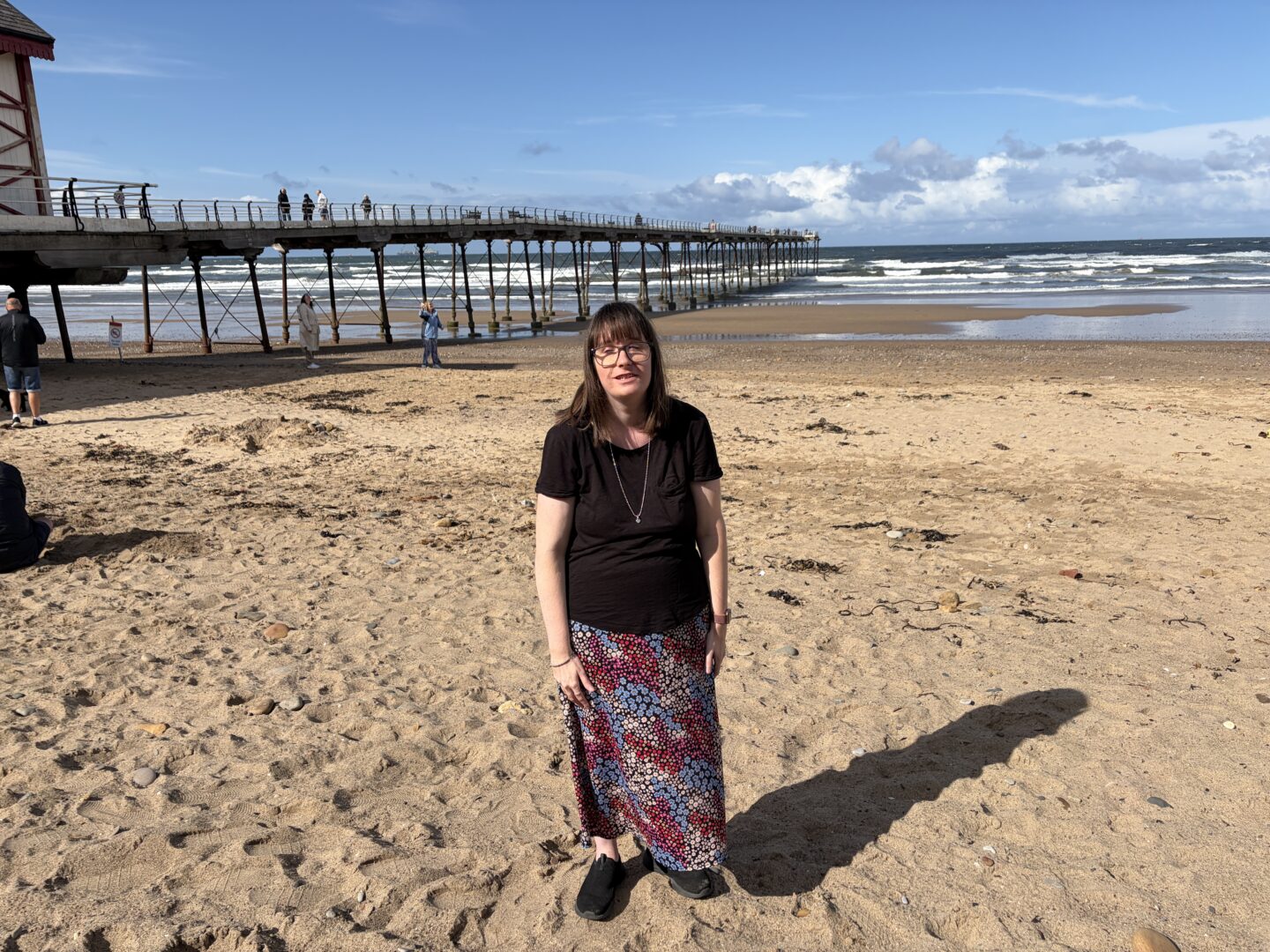
There’s no one size fits all approach to accessibility
A common misconception is there’s one singular definition for accessibility.
Accessibility is nuanced, and it’s also personal. It’s layered, with those layers often changing depending on the situation.
Think of a scone; is it jam or cream first? Yes, I’ve chosen a very British example.
Accessibility is the same – it varies person to person.
Something that’s accessible for one person might not be for another. That doesn’t mean that it is impossible or can’t work. It means that we need to stop thinking about it as a one size fits all approach.
Instead, we should be thinking about accessibility as something that’s ongoing. It’s a journey that doesn’t have an end.
Although destinations can give us an aim and something to work towards, it’s not like that for accessibility.
We can get so caught up on how accessibility must be perfect. I get it, people don’t want to do the wrong thing.
Take it from one disabled person: strive for progress, not perfection.
If something isn’t accessible, be open about that. I’d much rather have your honesty, so that I can make my own, informed decision.
Saying that something is fully accessible doesn’t tell me much if I don’t know what that means. Instead of telling me something is accessible, tell me how.
To sum it up, accessibility is about having choice. Please don’t take that away from us because you’re trying to squeeze it into one box that simply won’t work.
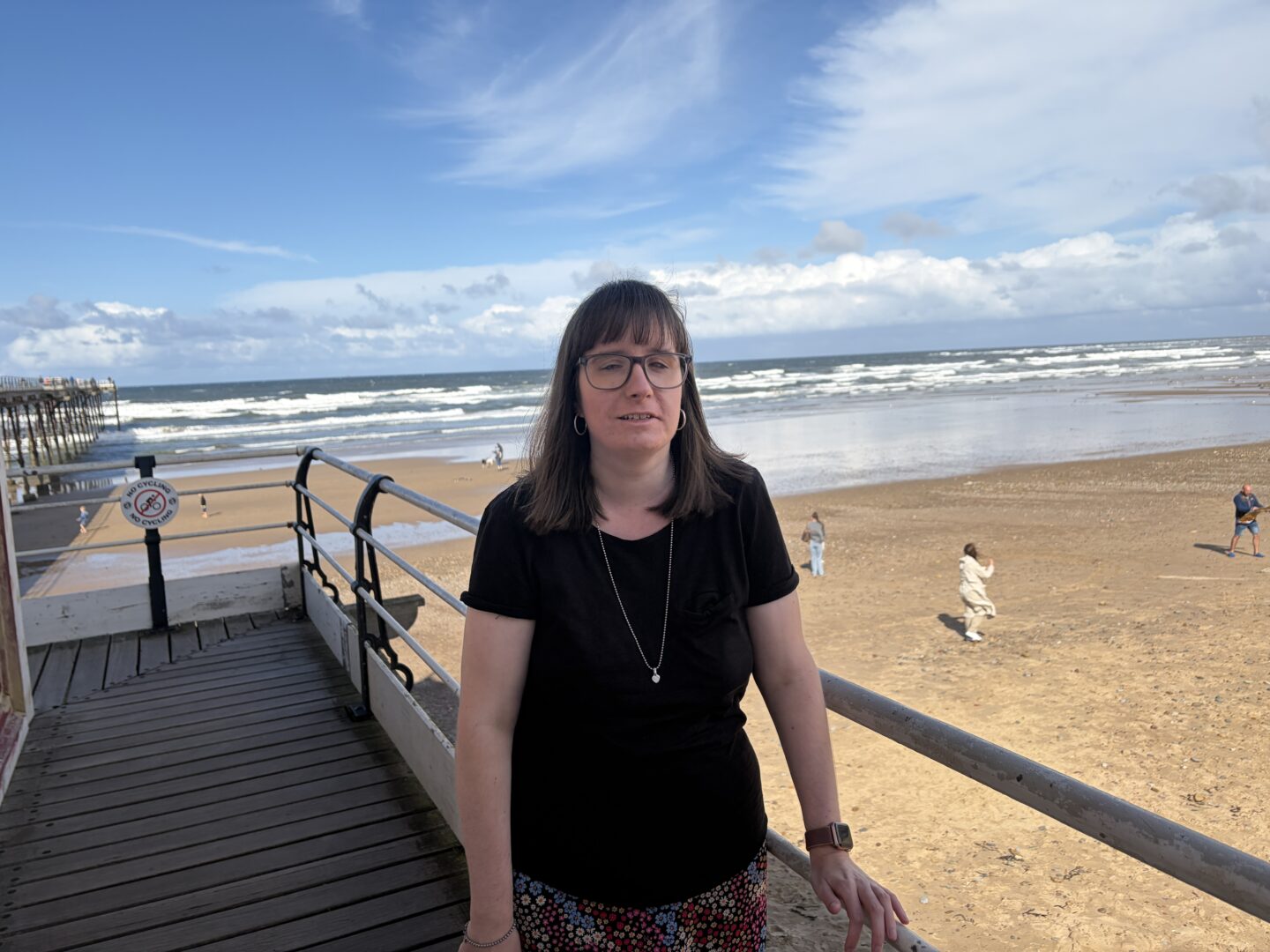
Accessibility must involve disabled people
One of the main reasons I don’t like the idea of ‘fully accessible’ is because in my view, it suggests that making something accessible can be done without speaking to disabled people.
Accessibility can’t be designed in a vacuum. Disabled people need to be involved.
We need to be involved from the start. Not as an afterthought or later down the line. We need to be part of the process.
Disabled people’s lived experience is one of the most important elements at your disposal. We know what it’s like when something works, and when it doesn’t.
There’s a stark difference between someone telling me that something is accessible and that being the reality.
Ask disabled people what works. Listen when we tell you what doesn’t. Take note of our feedback, and make changes.
Keep learning. Perhaps most importantly, don’t get defensive.
It goes without saying that involving one disabled person doesn’t mean you’ve spoken to every disabled person. Are access needs are wildly different. That’s why accessibility needs to be approached with openness and flexibility.
Side note – please be respectful of our time, knowledge and resources.
Accessibility benefits everyone
Whilst you should of course be speaking and listening to disabled people, accessibility doesn’t just benefit the disabled community alone. It benefits everyone.
That’s a phrase I’ve said countless times on here. It can’t be said enough.
When websites are easy to navigate, it makes the task at hand easier for everyone.
When information is clear, everyone benefits.
When documents are provided in different formats, more people can access them.
When there’s detailed access information, no one is left guessing.
Accessibility is often talked about as though society is doing disabled people a favour when something is accessible. When in fact, accessibility is better for everyone.
It makes information easier to access, it gives everyone a choice, and removes barriers. That’s a win for us all.
There’s an important distinction here though. Something being accessible doesn’t mean it is accessible to absolutely everyone. That doesn’t make the effort to improve accessibility pointless.
It’s quite the opposite. It means we need to keep improving.
We should all be striving for accessibility
You might be feeling that there’s no point making something accessible, because it won’t be accessible for everyone. That’s the last thing I want you to take from this post.
Although accessibility isn’t a one size fits all approach, it changes everything.
If you prioritise accessibility, and put genuine work into making something accessible, that goes much further than if you didn’t.
You don’t need to promise that something will work for every disabled person, because it won’t.
What you need to do, is think about accessibility, involve disabled people, be honest about what you’ve done, and where there might be gaps.
When you’re caught up on being ‘fully accessible’, remember that there’s no such thing.
Don’t strive for perfection.
Instead, remember that accessibility is about inclusion, having a choice, being considered, and feeling welcomed.
Even though fully accessible is a myth, considering accessibility makes the biggest difference.
So, the next time you hear someone say the phrase ‘fully accessible’, I want you to think about that phrase a little differently.
Don’t just ask, “is it accessible?”
Ask, “accessible for who?”
Let’s all keep working from there.
Holly x

![There’s a phrase we hear far too often: “fully accessible”.
Hotels use it. Venues use it. Website developers use it. Event organisers use it.
On the surface, it sounds brilliant. But there’s no one size fits all approach to accessibility.
Because accessibility isn’t a box you can tick once and forget about. There isn’t a magic point where something becomes accessible to every single disabled person.
Our access needs are different. What works for one person might not work for another.
Rather than asking, “is it accessible?”
Ask: “Accessible for who?”
In my latest blog post, I’m exploring why “fully accessible” is a myth. Head to the link in my bio if you’d like to give it a read.
[Image descriptions:
Image one: Holly stood on a pier, leaning against a railing by a sandy beach with the sea in the background. She wears a black T-shirt, a skirt with a colourful floral pattern, a silver necklace and glasses.
Image two: Holly sat on a low stone wall beside a shallow stream with a path running alongside it. Dense green bushes and trees line the far bank, forming a thick hedge along the water. There is a small bridge and a building in the background. She wears a black T-shirt, a long, multicoloured patterned floral skirt and a silver necklace.]](https://lifeofablindgirl.com/wp-content/plugins/instagram-feed/img/placeholder.png)
Leave a Reply