I’ve wanted to pen this piece for a good few weeks now. The thing is, I couldn’t quite find the words. Partly thanks to brain fog, partly because I couldn’t string the sentences together, and partly because it’s been non-stop.
Like every blog post, I’m going to be real with you, even if putting my vulnerability into the public domain makes me feel uncomfortable.
I’ve been feeling a sense of burnout recently. Not in the usual way you’d expect by overworking myself. Even though that’s coming from someone who’s a workaholic.
Rather, it’s in the sense of disabled burnout.
You’d think that of being disabled my entire life that I might be used to this feeling by now. Whilst I can recognise it much better than I used to, there are times when the wave hits me. So I’m taking the uncomfortable and talking about it.
Before we dive into the topic, I want to reassure you that this post isn’t a call for help. I’m taking a pause on my usual content to talk about something I think we need to discuss more openly and without judgement, both in the disabled community and beyond.
Disabled burnout is real, and to be straight, it isn’t going anywhere anytime soon.
Disabled burnout is one of the many silent components of having a disability. It might not always be there. Sometimes it might be like a slow burning candle, other times it appears like a flash of lightning. It ebbs and flows. I’ve been on the receiving side of both.
The scary part can be that I can carry on even when my tank feels empty, and you wouldn’t know. That’s what they call resilience…
It’s not just getting through the days, it’s navigating everything that’s thrown your way.
There’s a pressure for disabled people: to be the so-called perfect disabled person, the pressure to rise beyond the inaccessibility, and the pressure to just get on with it. The world is constantly demanding more from us. What about when those demands are too much.
It’s the sort of thing that we carry on with, until the burnout hits because it’s just one barrier after another. Everyone has their limits.
Although the burnout may not always be present, sometimes it gives you a hard smash in the face.
Because we can only be resilient for so long.
The resilience is coupled with pressure to adapt, to push through, to prove your capabilities.
Many of us internalise that pressure and resilience. If we’re not being resilient, then we see it as a failure.
Disabled burnout often comes from living in that space and mindset for too long.
Here’s the truth, and only the truth: you don’t have to be resilient all the time. Please, please stop measuring your worth on how much you can withhold.
That resilience showed up for me recently. After applying for Access to Work – a scheme that helps disabled people get the support and adjustments they need to do their job, I was hit by disabled burnout a few months down the line, thanks to long wait times. I reached a point where I couldn’t problem solve anymore.
That was the moment I admitted I’d reached my limits, and that I wasn’t okay. I couldn’t be resilient for much longer.
I didn’t explicitly call it “disabled burnout” at the time, but it was a wake-up call nonetheless.
Then it struck me: that resilience didn’t have to be permanent.
If I kept the fact I was struggling to myself, there was no one suffering more than I was.
Burnout doesn’t always arrive loudly. It also shows up in subtle ways. Take receiving letters in inaccessible formats, or being presented with a touchscreen card machine three times in the space of a week. Those are some of the more cumulative examples that have been my reality over the past few weeks.
That’s only scratching the surface. I’m used to the lack of accessibility, the constant barriers, the reality that disabled life can feel like a full-time job at times. Burnout bubbles beneath that surface. It builds, slowly, until it reaches boiling point. It’s one barrier, one extra problem to solve right there on the spot, after another.
And that’s the thing: none of this fits the typical concept of burnout. It’s not about overworking yourself in the traditional sense. If anything, the irony is that society and its systems demand so much of us. There’s a constant, often invisible pressure to adapt, a demand that never really switches off.
Disabled burnout is, at its core, about existing in a world that wasn’t designed for you, and having to bridge that gap every single day.
It’s the exhaustion and frustration that comes from advocating for your needs and navigating barriers, over and over again. That advocacy starts to weigh heavy.
Take those aforenamed barriers I mentioned as an example. They don’t disappear with a good night’s sleep or a weekend off. It’s the kind of burnout that quietly sits with you, living rent free in your head, and in your body. That’s because it’s systemic.
It’s filling in forms. Chasing support you’re entitled to. Explaining your needs on repeat. Asking for accessible formats for the tenth time that week. Hoping people understand so you don’t have to overexplain.
It follows you everywhere, because there’s no off switch. You can’t log off from inaccessibility, not in 2026 anyway.
All of that mounts up. It consumes energy.
Energy that non-disabled people often don’t have to spend. Energy that, for many of us, is already in short supply.
When that energy runs out, the world doesn’t stop. The barriers don’t pause.
That’s where burnout creeps in. Everything feels heavier, and a whole lot harder. It doesn’t hit all at once. It slowly builds up, until it starts to crush you.
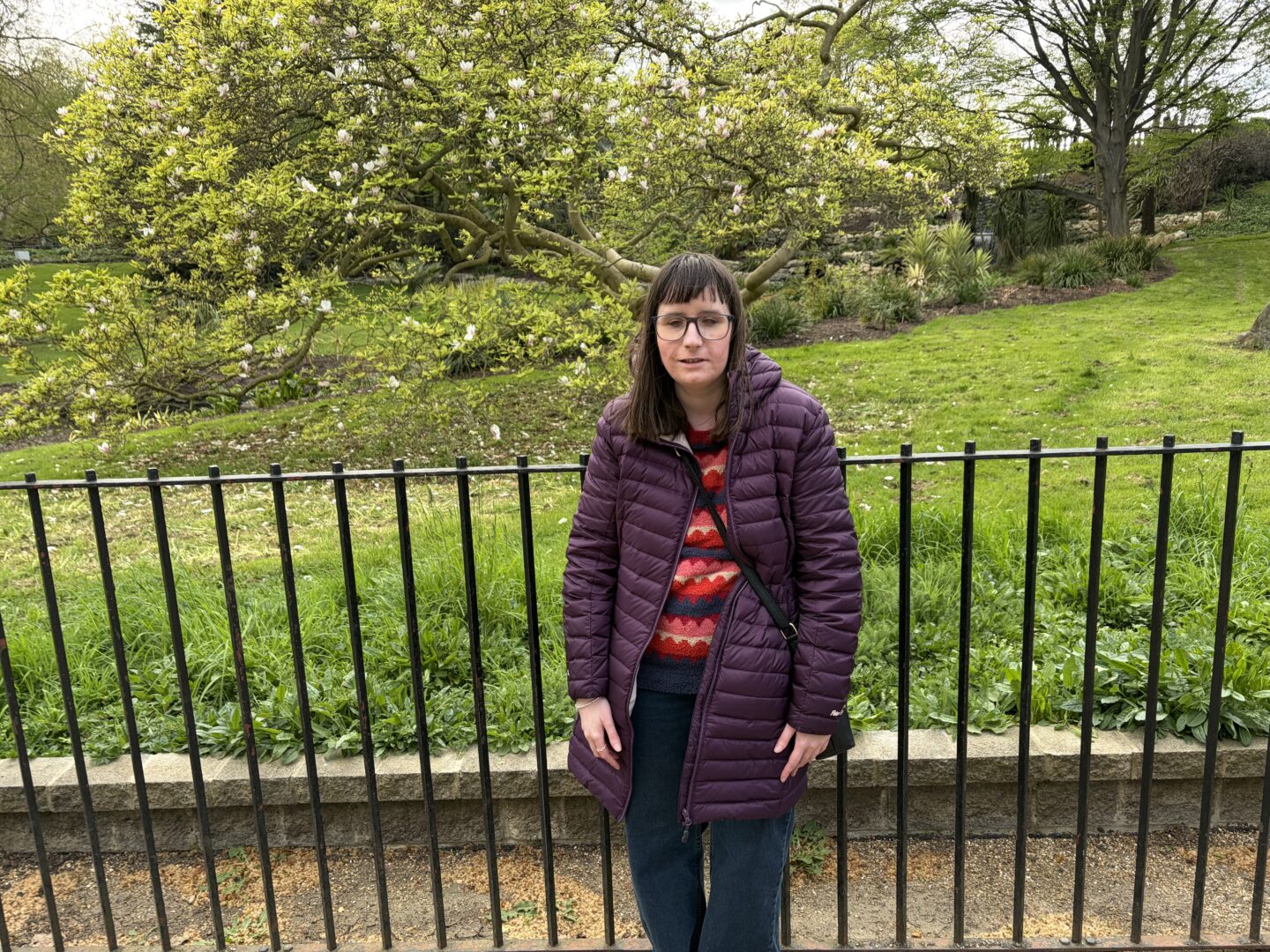
They say the tough times come with lessons. I’d like to think that amongst the exhaustion, there’s lessons to be learned.
We’re conditioned to keep showing up, to keep going. That right there, is the problem.
Perhaps the hardest, yet the most important lesson for us disabled people is that we need to turn that resilience into saying enough is enough. Acknowledging that we’re burnt out, even if that means being honest that we’re not okay. Confessing that we don’t want to fight anymore. We shouldn’t have to.
We can’t do that alone. We need those truths to be met with open arms.
Thankfully though, there are moments of liberation and people who get it, without you needing to explain. Systems that are accessible. Tasks that you don’t quickly need to adapt to find a solution.
I know I’m fortunate to have people around me who want to help, many of whom which recognise that sense of burnout creeping up on me.
I’m incredibly grateful for that support or listening ear. The thing is though, society has a bigger responsibility to make accessibility the norm or to fix the barriers that disable us.
Resilience shouldn’t have to be an act of defiance.
When we don’t have to constantly be in survival mode, our internal battery is fully charged. We’re rejuvenated.
But with that spring of energy, we still can’t dismiss disabled burnout. Because when it hits, it takes hold more than you realise.
I don’t have the answers or a magic solution to make it stop.
What I can do, is use my blog to share my own vulnerabilities and tell you that I get it. I too, have been struck by disabled burnout more than once. It’s something I’m experiencing while writing this. I’ll likely experience it again and again.
Some days I want to be resilient. Some days I want to fight the inequalities and injustice. Other days, I don’t want to fight it.
All of that is okay.
If you’re also feeling the weight of disabled burnout, I want you to know that you’re not alone. You don’t have to pretend. You don’t have to be resilient when you don’t have the energy to do so.
We’re in it together. Surround yourself with people who help get you through those days, weeks or months.
I won’t lie, I did feel quite nervous putting this post out there. If it helps just one person know that how they’re feeling is valid, then it’s been worth it.
Holly x
![Not only did I attend the 7 goal thriller between @arsenalwfc and @manutdwomen on the final day of the 2024/25 @barclayswsl season over the weekend, I was also provided with the most amazing audio descriptive commentary.
It’s no secret my love of Manchester United. I’m going to make it known now that I have a pretty big soft spot for Arsenal too.
Many of the Arsenal team are some of my favourites. It’s also clear that the club care about accessibility and inclusion for disabled supporters, something that’s extremely important to me.
And their commitment to accessibility was clear from the call I made to book tickets, right through to the match itself.
But the audio descriptive commentary scored an extra goal or two for me. Audio descriptive commentary is a rarity in the women’s game. It’s something I’ve been desperate to experience for the last few years. Now that I’ve had that experience, I can wholeheartedly say that it completely transforms the experience of the match as a blind fan. I don’t have the words to explain the feeling of inclusion it gave me.
I tried to sum it up, documenting my experience of the match over on the blog. If you’d like to give it a read, head over to lifeofablindgirl.com – a link to my blog is also in my bio.
Thanks to an epic game on the pitch and the accessibility off it, the Arsenal versus United match is by far my favourite game I’ve ever attended. I hope to be returning to the Emirates soon!
@arsenal @manchesterunited @alanmarchsport
[Image descriptions:
Image 1: Holly stood in the Emirates Stadium with a view of the pitch behind her. She’s wearing a light blue denim jacket and is smiling at the camera.
Image 2: A Manchester United player running towards the Arsenal goal in the semicircle of the penalty area. Arsenal players can be seen positioned around her.
Image 3: Two Arsenal players hugging each other after celebrating a goal. Other Arsenal players can be seen running towards them to join in the celebrations, whilst Manchester United players are walking away. The Arsenal players are wearing their red home shirts, and the Manchester United players are wearing their blue away shirts.]](https://lifeofablindgirl.com/wp-content/plugins/instagram-feed/img/placeholder.png)
Holly, you said it beautifully. And accurately. Sometimes the matter of dealing with doing what we want or getting what we need becomes too much. Your feelings and advice are spot on. Thanks so much. – George 🙂