As I publish this, we’re a few days in to 2026. The new year is the perfect time to set your goals and intentions for the next 12 months.
I’m here to ask for your support in setting yourself an extra goal, aside from the traditional ones.
Why not add accessibility and inclusion to that list?
Hopefully what I’m going to share in this blog post will help you stick to it throughout 2026 and beyond.
I hear you. You might be thinking that it’s too difficult, you don’t have time, or you don’t need to prioritise accessibility. Well…
Accessibility doesn’t always mean grand gestures. Sometimes the smallest actions go a long way.
It’s not a tick-box exercise. What works for one disabled person may not work for another.
No matter whether you’re disabled yourself or not, or have disabled friends or colleagues, accessibility is everyone’s responsibility regardless of how it impacts us.
With that said, there’s lots of things we can all do to prioritise accessibility and inclusion.
Accessibility should be something we each live by for 365 days of the year, and the new year is a good time to start.
Make a commitment to accessibility all year round.
Are you with me?
Here are 10 ways you can be accessible and inclusive.
1. Keep pavements free from obstacles
I know, I know. We all have busy lives. We’re rushing around running errands between managing daily tasks, and juggling work or education.
Don’t you just love it though when you’re out for a walk and the pavements are free of clutter? I’m sure you get what I mean.
Trees and hedges that are cut back, A-boards or wheelie bins not blocking your path, cars not parked on the pavements, I could go on.
Clear pavements help disabled people navigate freely and independently. They also benefit parents with pushchairs.
Clutter-free pavements help everyone navigate safely. They don’t put us in tricky situations like going in the road to avoid the obstacle that shouldn’t be there in the first place.
2. Remember that when guide dogs are working, they shouldn’t be distracted
Guide dogs might look cute, but they have a very important job to do. If you pet a guide dog when it’s working, you’re putting both the guide dog and a blind or visually impaired person (the handler) at risk. When you distract a guide dog, the handler has to get it to focus on the task at hand again. A moment of distraction can have consequences.
Resist the urge to distract a guide dog.
3. Create accessible documents
Never assume that people you’re sharing documents with require them to be in an accessible format. It’s best practice to share materials in an accessible format, no matter the recipient.
Here are a few tips:
- Using headings
- Setting tables up correctly
- Using a clear font
- Adding alt text to images
- Making link text relevant
- Not relying on colour to convey meaning
For more tips, check out Microsoft’s guide on creating accessible documents.
Creating accessible documents not only saves you time in the long-run, it makes a better experience for everyone.
4. Offer alternative formats
Accessibility looks different for everyone. What works for one person might not work for another. That’s why offering alternative formats is so important.
PDF’s aren’t always the most accessible with screen readers. So, you could also offer a Word document version.
Create a plain text, Word document version of your PowerPoint presentation so people can choose which works for them.
Providing alternative formats from the get-go saves someone requesting it. It’s a far nicer feeling for everyone when we’re given what we need without us having to ask.
Creating alternative formats isn’t extra work. It’s giving people a choice to access the materials you’re sharing in a way that works for them.
5. Make your social media content accessible
Whether we like it or not, we live in a world that is consumed by social media. As someone who works in social media and also uses my platforms for disability advocacy, I’m accustom to being chronically online (although in a much healthier way than I used to be), I’m very familiar with the trials and tribulations of socials.
One of the main things that taints my experience of using social media is inaccessible content. It zaps my enjoyment and makes me feel excluded. It’s pretty deflating.
With some simple steps, we can all turn that negative experience for disabled people into a positive one.
I’m talking:
- Adding alt text to images, memes and gifs
- Captioning your videos
- Capitalising the first letter of each word in hashtags
- Not going bananas with the emojis
- Avoiding using fancy fonts
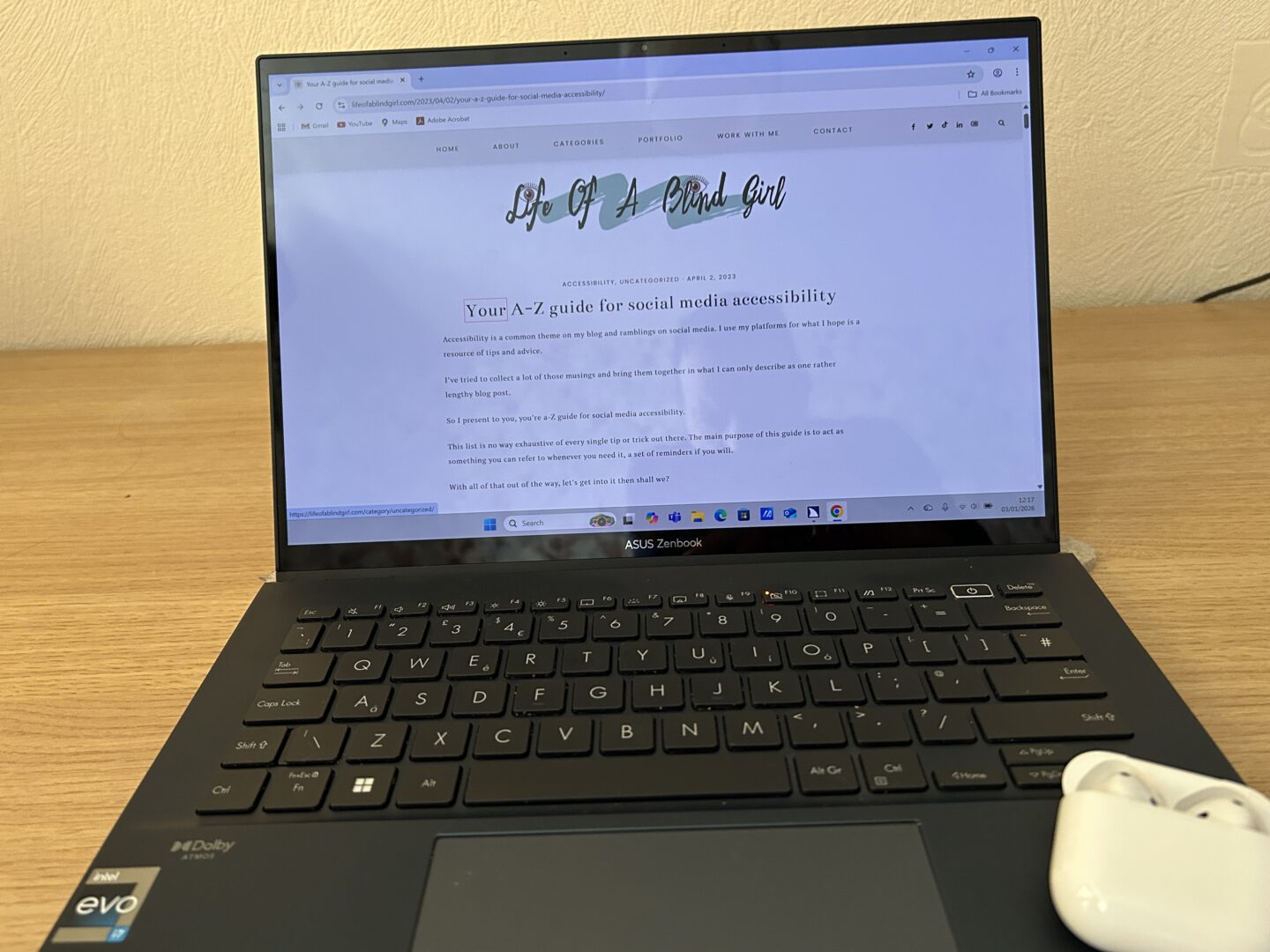
I’ve put together a handy A-Z guide if you’d like even more tips to make your social media content accessible.
6. Use inclusive language
Always think about whether the words and phrases you’re using are respectful to disabled people. What might seem like a joke to you might be offensive to someone else. Sometimes throwaway comments can be harmful.
And please, respect people’s language preferences. We all have our own ways we identify as disabled people.
If ever you’re in doubt, politely ask.
7. Make space for everyone at the table
This is about actively ensuring that everyone is included in meetings, at social events, days out, online spaces, workplaces, classrooms and everyday life.
It’s about having shared experiences and the same opportunities. WE need the space to succeed and participate.
Disabled people want to be heard, not spoken for.
8. Challenge assumptions
By following accessible best practices yourself, you can help others to do the same. That’s one of the ways you can be a disability ally.
This also includes your own preconceived ideas. Accessibility is a constant learning opportunity. Over time, you’ll learn to change your thinking. If those old habits start to creep in, take a minute to rethink it.
9. Be an advocate
Advocacy starts by believing disabled people. Not questioning our experiences or dictating our needs. It’s remembering that disabled people are the experts. We know ourselves, and our disability best.
Advocacy also means listening to us, and I mean really listening to what we have to say. Give us the time to speak, rather than speaking for us.
It’s about amplifying our voices, sharing our work, and giving us space.
Advocacy is about handing the baton to us, ensuring we’re included in the decisions that affect us.
It’s not just about the big moments. It’s about pushing for accessibility before someone else has to ask. Access shouldn’t always fall on disabled people.
Disabled people need your support. We can’t change society alone.
10. Consider accessibility in everything you do
Shift the mindset of accessibility being an afterthought, to it being embedded into your life. Accessibility needs to be baked in, not added on later.
Ask yourself how you can make something accessible. Do your own research. Take small actions that will make a huge difference.
It’s not complete until it’s accessible.
You won’t always get it right, and that’s okay.
Remember, progress over perfection.
What matters is how you’re proactive, being open to feedback, and willing to do better next time.
When accessibility becomes part of everything you do, inclusion is the default.
There we go, 10 ways you can prioritise accessibility and inclusion. These are just some of the many small, yet powerful actions you can implement to make the world much more accessible for disabled people.
Accessibility is far too often pushed to the bottom of the list. It’s time it became a priority. You can help make that a reality.
You don’t have to make all of these changes today. Start small and keep building.
You might not feel like your work is having an impact. What you don’t see though is the way it’s making someone feel. That feeling of inclusion is priceless, I’ll tell you that for free.
Fellow disabled people, what would you add to this list? I’d love you to share them in the comments.
If you’ve taken something away from this list, I’d love to know which action you’ll be taking forward.
Holly x

![There’s a phrase we hear far too often: “fully accessible”.
Hotels use it. Venues use it. Website developers use it. Event organisers use it.
On the surface, it sounds brilliant. But there’s no one size fits all approach to accessibility.
Because accessibility isn’t a box you can tick once and forget about. There isn’t a magic point where something becomes accessible to every single disabled person.
Our access needs are different. What works for one person might not work for another.
Rather than asking, “is it accessible?”
Ask: “Accessible for who?”
In my latest blog post, I’m exploring why “fully accessible” is a myth. Head to the link in my bio if you’d like to give it a read.
[Image descriptions:
Image one: Holly stood on a pier, leaning against a railing by a sandy beach with the sea in the background. She wears a black T-shirt, a skirt with a colourful floral pattern, a silver necklace and glasses.
Image two: Holly sat on a low stone wall beside a shallow stream with a path running alongside it. Dense green bushes and trees line the far bank, forming a thick hedge along the water. There is a small bridge and a building in the background. She wears a black T-shirt, a long, multicoloured patterned floral skirt and a silver necklace.]](https://lifeofablindgirl.com/wp-content/plugins/instagram-feed/img/placeholder.png)
Well put.
Thanks Amanda.
I always find myself nodding along whenever you share tips like this, it’s so important that people know how much of a difference small actions can make. Thank you for sharing as always xxx