Comparison is something we all experience, whether it comes from ourselves or others. Language surrounding disability, comparison and success always lead me back to the phrase which prompted the title of this blog post.
With that in mind, I want to talk about that particular phrase in relation to disability, because it’s something that I feel we need to address.
I’m a tad nervous to put this post out there, but I’m hoping that some of you will get where I’m coming from.
There’s a couple of disclaimers I want to make clear before we get into the post.
First and foremost, this post is not meant to cause offence in any way. It’s simply to highlight a topic that I personally want to talk about. I hope it provides some food for thought.
I’m also sharing my own personal thoughts and experiences, and as always, they are not reflective of every disabled person’s thoughts or opinions.
Finally, I’m not saying that comparison isn’t important (in some instances it is), but I want to address this narrative in relation to disability because I think it’s important to do so.
Let’s discuss…
Addressing the “but they did it” narrative
I think the main strand of this ideology is comparison. When a fellow disabled person does something, people automatically assume that many of us are going to do the same. But that’s not how it works. We’re all in our own lane.
I became aware of comparison surrounding disability from quite a young age. Non-disabled acquaintances would inform me of the achievements of fellow disabled people.
They were a bit like this:
“So and so is studying *a particular course* at university, maybe it’s something you could look into?”
“They were a complete beginner at that sport and now look at them! Why don’t you give it a go, you could have amazing sporting success like them”.
“A blind person I know went travelling, isn’t that brilliant? Your blindness won’t stop you from doing that sort of thing you know”.
“If they did it, so can you”.
“And look at them now”.
This assumption that another disabled person achieved a particular goal does not mean that I’m going to set my sights on those goals as well. Our aspirations might cross over in some ways, but our disability does not automatically mean that this is the case.
The fact that they went on to study a particular course at university or went travelling is fantastic, why shouldn’t they do all of those things if they want to? But maybe I want to do something different.
I know that the examples of other people’s accomplishments and latest adventures are meant with good intention, but rather than feeling motivated, I’m left feeling like I’m being compared to others.
I genuinely think that we should celebrate disabled people’s achievements and give them the recognition they deserve. However, there’s a line between encouraging someone to strive to achieve something and putting pressure on them.
One thing that crops up in conversations like this time and time again is “but they did it”, and that’s often the part of the conversation that’s the most striking.
For the most part, it’s said in a thoughtful way, in the hope of providing a bit of positivity. But there’s also a flipside.
It’s those words of comparison, expectation and judgement.
I know it’s something that we’re all told at some point, and we’ve probably uttered them to other people as well. It’s certainly not disability specific. But as a disabled person, those words of comparison are something I’m all too familiar with.
It’s the assumption that just because another disabled person has gone on to achieve something wonderful or has fulfilled a life-long ambition, we should strive to do the same. Whilst I think we should celebrate people’s achievements, we should not put that pressure on others. Disability doesn’t fit into a box. Just like non-disabled people, our goals and ambitions differ.
I’ve said it before and I’ll say it again, everyone has their own goals and ambitions. We each go down our own, unique path in life. Life would be boring if we were all the same.
I’m happy with the path I’m taking in life and the career I’m carving out for myself. I know that I don’t have to do something that another disabled person has worked towards because that’s not what I want to be doing, it’s not a true reflection of the person I am. I know that the goals I’m working towards are just as worthy as other people’s ambitions.
Most importantly, I know that disability and success is different for everyone.
But what message is “they did it” sending to others? Is it telling them that someone else did it, so there’s no reason they shouldn’t do that as well, or is it putting pressure on them to live up to expectations? Perhaps statements like this make people feel empowered. It may give them a bit of encouragement and motivation. If that’s the case, then I’d never want the negative connotations to cast a shadow on the positive ones.
Maybe I’m being far too serious about it all and trying to find the deeper meaning when I don’t even need to.
When I’m in the proximity of these words I start comparing myself to others and start asking myself if I should be doing more, even though I know that I’m trying my best. If I’m left feeling that way, then how many other people feel the same?
It’s not always a dark cloud though, there are of course times when I feel empowered by those words, and they fuel me with motivation.
A lot of the work I do both online and offline is centred around sharing the reality of being a disabled person. I do this to raise awareness and break down stereotypes. Therefore, I will stand my ground when it comes to encouraging others to strive to achieve their own goals and ambitions. No one should have their aspirations dictated to them.
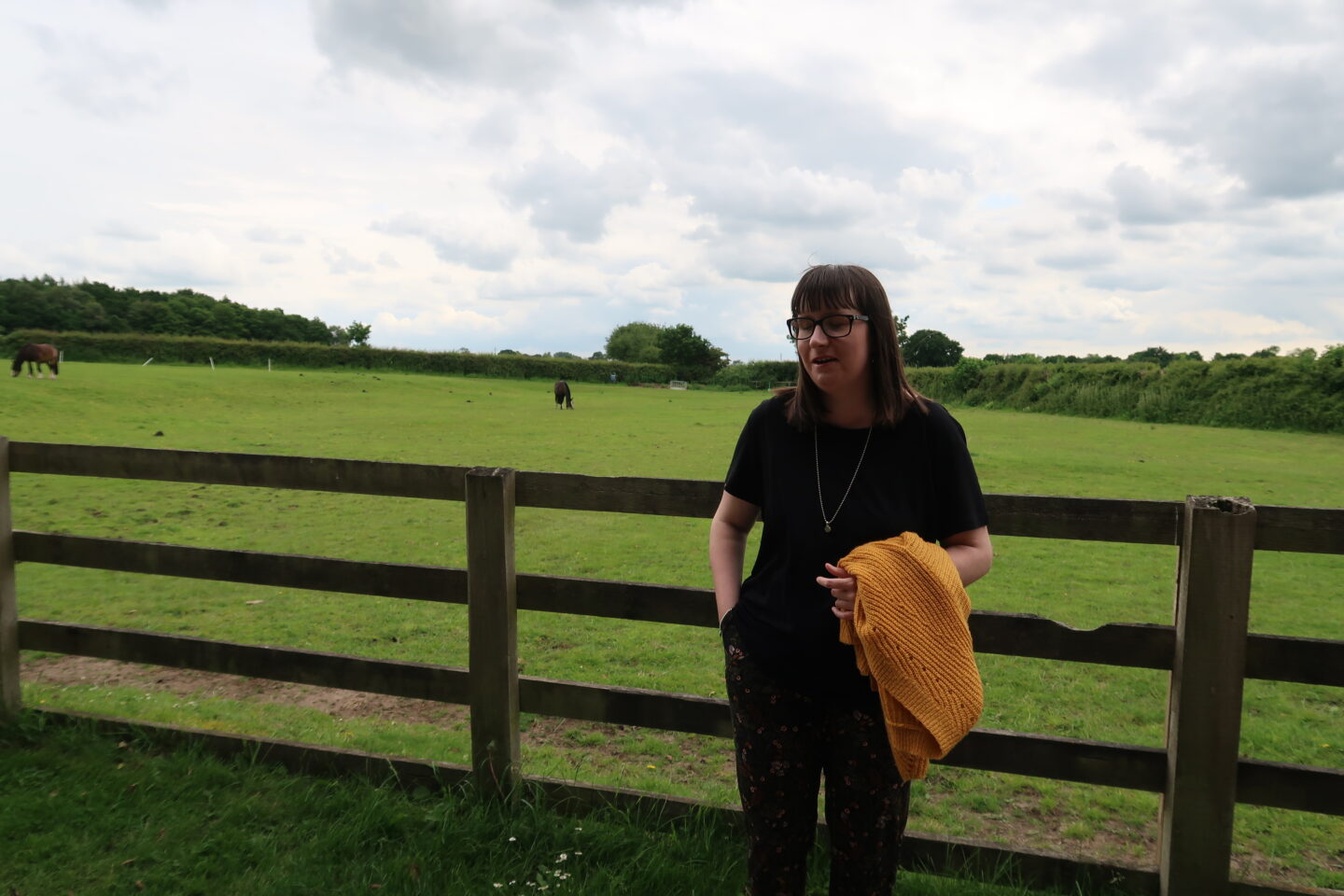
If you’ve ever felt pressure to work towards a particular goal or to conform to such narratives, I want you to know that you don’t have to follow those expectations and assumptions. Your hopes, goals and ambitions should never be dictated to you because of your disability.
You deserve to be encouraged to write your own life story.
I completely understand that everyone has their own opinions on this topic. Where do you stand on the “but they did it” narrative? Feel free to leave your thoughts in the comments!
Holly x

![There’s a phrase we hear far too often: “fully accessible”.
Hotels use it. Venues use it. Website developers use it. Event organisers use it.
On the surface, it sounds brilliant. But there’s no one size fits all approach to accessibility.
Because accessibility isn’t a box you can tick once and forget about. There isn’t a magic point where something becomes accessible to every single disabled person.
Our access needs are different. What works for one person might not work for another.
Rather than asking, “is it accessible?”
Ask: “Accessible for who?”
In my latest blog post, I’m exploring why “fully accessible” is a myth. Head to the link in my bio if you’d like to give it a read.
[Image descriptions:
Image one: Holly stood on a pier, leaning against a railing by a sandy beach with the sea in the background. She wears a black T-shirt, a skirt with a colourful floral pattern, a silver necklace and glasses.
Image two: Holly sat on a low stone wall beside a shallow stream with a path running alongside it. Dense green bushes and trees line the far bank, forming a thick hedge along the water. There is a small bridge and a building in the background. She wears a black T-shirt, a long, multicoloured patterned floral skirt and a silver necklace.]](https://lifeofablindgirl.com/wp-content/plugins/instagram-feed/img/placeholder.png)
Maybe it’s time to turn the tables and ask when they are going to climb Everest, walk from Lands End to John O Groats, fly a jumbo jet because other people without a disability do it.
I’m nearly 60 and coming up towards the 5th anniversary of having my sight loss diagnosed, I have other health challenges also, I ignore people who say “so and so does this” because I’ve only just got my Inner Mean Grump (IMG) under control. Before my health challenges began I used to walk an average of 8 miles a day between my active job and walking my dog, after my hysterectomy I really struggled and had to slow down a bit. Now I’m celebrating if I manage to walk 3 or 4 miles 2 or 3 times a week. My goal is to walk each day and on short walk days I’m happy with 2 miles.
I can’t understand why people expect all disabled people to be Paralympians when they don’t expect everyone else to be an Olympian.
Absolutely!
Thank you so much for being so open and for sharing your experiences, Lynne. It sounds like you’ve set yourself some great goals and milestones that work for you. We should celebrate every achievement, even the small ones!
Hi Holly
Your views are really interesting and always make me see another side. I teach a class of 10 junior school children with VI. Three of them, with no sight at all, are concerned that their disability will prevent them from achieving their aspirations when they are older. I use positive role models to encourage them. I will be mindful of applying too much pressure in future.
Keep writing.
Kate
Thank you so much, Kate.
As someone who never had any disabled role models when I was a child, it makes me really happy to know that you are showing the children that their disability won’t be an obstacle for success and providing them with that much-needed representation, so thank you! Keep up the amazing work 🙂
Yes give them a positive role model but remember to give them alternatives. I’m one of 5 siblings though we were brought up with the same values and education etc we all went our own ways with interests and careers.
Not everyone needs to become the CEO of a company or number one in their field. Remind your pupils they only need to compete with themselves and become the best version of themselves. Help them polish their skills. Remind them that everything takes practice. I’m nearly 60 and my goal is to see if I can learn Braille (currently I can’t feel the difference between the various cells I don’t know if it’s technique or my fingers aren’t sensitive enough (certainly after a walk with my cane my fingers tingle and are less sensitive)) if I never learn to feel the dots I can certainly learn to type using the Braille keyboard inbuilt in my phone to make typing easier as my sight continues to deteriorate.
Tell your pupils from an old coot that lost most of her sight 5 years ago that anything is possible if you keep looking for a solution. I now walk independently exploring new walking routes just with my walking stick and white cane. I hop on buses confidently. And the sewing I thought would become impossible is full of infinite possibilities and is more accurate than ever. It may take time to find a solution but so far anything I really want to do I’ve found a way to make it work.
Hi Holly
another lovely post as always
this hits home. I’m all to familiar with all this. specially as someone who finds it really hard to ignore certain things like ableism and move on.
sometimes, even if we want to do something, our situation is such that we’re unable to do that thing during that particular time. reading this reminded me of one such instance. won’t go too depe but it was on the lines of “so and so is blind but they can do this task alone, why can’t you?”
this spurred the same feelings as you described.
thank you for this post. it’s comforting to know that it isn’t only me who finds “but they did it,” narrative rather disconcerting.
Thank you so much, Khushi. Thank you for sharing your thoughts and experiences as well, you are definitely not alone in feeling that way
Completely second everything you said in this post. I think that the ‘but they did it’ narrative can be really damaging at times and it’s something I’ve come across as a disabled person too. Whilst so many people have the best intentions by saying these things, I think it’s time to hit the whole concept on the head and for people to remember that everyone’s journey is different and takes a different amount of time. Thank you for sharing your thoughts on this lovely xxx
Thank you lovely! Absolutely, completely agree with you xxx
Thank you for posting this. I’ve dealt with this from a young age too, not helped by having a brother a year older than me who also happens to be blind. So, on top of the usual comparisons to random disabled people, I also had people genuinely confused when my brother could or would do something I either couldn’t or had no desire to do, and if I had a penny for every time someone said, “But your brother did it,” I’d be filthy rich. While we do share some interests, my brother and I are different people with different preferences and lifestyles. Not to mention, his only health issue is his lack of sight, while I’ve had others to deal with all my life. But everyone assumed if he did something I should be doing it too, and if I did and wasn’t as good at it as he was that I clearly wasn’t trying hard enough. They’d also point out that since I did have a little sight during my childhood, if he could do it with none, I should be able to do it easily with limited sight.
Thank you. I can only imagine how frustrating that must be for you
I’ve got a disability and people expect great things from me.
I just want to live an ordinary life. Is that too much to ask?
Completely agree!